Tuesday, October 16, 2012

Papal Latin Academy to Breath Life into Dead Language

Papal Latin Academy to Breath Life into Dead Language | Academy | ITALY Magazine

Papal Latin Academy to Breath Life into Dead Language

Papal Latin Academy to Breath Life into Dead Language
words by Carol King
Pope Benedict XVI is planning to set up a Papal Latin Academy to promote the use of Latin within the Catholic Church and the secular world.
Italian priest Fr. Romano Nicolini told the Italian press that the academy would include “eminent academics of various nationalities, whose aim it will be to promote the use and knowledge of the Latin language in both ecclesiastical and civil contexts, including schools.”
The Vatican’s existing organisation to advance the knowledge and speaking of Latin, Latinitas, is to be replaced with the Pontificia Academia Latinitatis. Latinitas publishes a magazine and runs a poetry and prose competition. It also translates modern words into Latin leading to translations such as ‘"ndrangheta" as ‘nruttianorum praedonum grex’, "overdose" as ‘immodica medicamenti stupefactivi iniectio’ and "playboy" as ‘iuvenis voluptarius’.
Latin is the official language of the Church but its use has fallen into decline since the 1960s when use of vernacular languages was adopted into the liturgy. Known as a traditionalist the Pope’s initiative has surprised some yet because Latin is the mother of Romantic languages it is considered a useful basis for linguists, opening the door to understanding both Ancient Roman art and literature as well as works created according to the Western Classical tradition.
The first work 
written in Latin by a Christian was Tertullian’s defence of Christianity, Apologeticum, which was addressed to the provincial governors of the Roman Empire. Now it appears that the Vatican is to defend the language itself against a world where language is continually evolving and becoming simpler thanks to the rise of social media.

Monday, October 15, 2012

Burial Customs - Archaeology Magazine

Burial Customs - Archaeology Magazine
Death on the Roman Empire's eastern frontier

necropolis

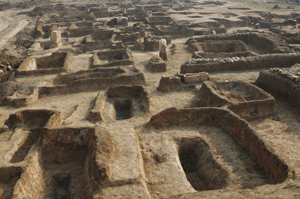
At one necropolis just outside the town of Scupi in Macedonia, archaeologists have thus far uncovered more than 5,000 graves dating from the Bronze Age through the Roman period. (Courtesy Lence Jovanova)


mass graveMass Grave Mystery

In the first century A.D. Roman army veterans arrived in what is now northern Macedonia and settled near the small village of Scupi. The veterans had been given the land by the emperor Domitian as a reward for their service, as was customary. They soon began to enlarge the site, and around A.D. 85, the town was granted the status of a Roman colony and named Colonia Flavia Scupinorum. (“Flavia” refers to the Flavian Dynasty of which Domitian was a member.) Over the next several centuries Scupi grew at a rapid pace. In the late third century and well into the fourth, Scupi experienced a period of great prosperity. The colony became the area’s principal religious, cultural, economic, and administrative center and one of the locations from which, through military action and settlement, the Romans colonized the region.

Scupi, which gives its name to Skopje, the nearby capital of the Republic of Macedonia, has been excavated regularly since 1966. Since that time archaeologists have uncovered an impressive amount of evidence, including many of the buildings that characterize a Roman city— a theater, a basilica, public baths, a granary, and a sumptuous urban villa, as well as remains of the city walls and part of the gridded street plan. Recently, however, due to the threat from construction, they have focused their work on one of the city’s necropolises, situated on both sides of a 20-foot-wide state-of-the art ancient road. In the Roman world, it was common practice to locate necropolises on a town’s perimeter, along its main roads, entrances, and exits. Of Scupi’s four necropolises, the southeastern one, which covers about 75 acres and contains at least 5,000 graves spanning more than 1,500 years, is the best researched. The oldest of its burials date from the Late Bronze and Early Iron Age (1200–900 B.C). These earlier graves were almost completely destroyed as Roman burials began to replace them in the first century. According to Lence Jovanova of the City Museum of Skopje, who is in charge of the necropolis excavations, the burials have provided much new information crucial to understanding the lives of ancient Scupi’s residents, including the types of household items they used, their life spans, building techniques, and religious beliefs. In just the last two years alone, nearly 4,000 graves have been discovered and about 10,000 artifacts excavated, mostly objects used in daily life such as pots, lamps, and jewelry.

ceramic face pot

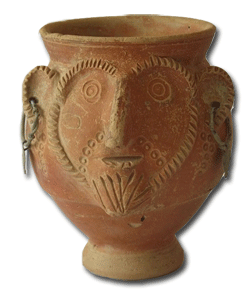
Among the many artifacts of everyday life found in the graves are a ceramic face pot dating to the first century A.D. (Courtesy Lence Jovanova)

Among the thousands of graves there is a great variety of size, shape, style, and inhumation practice. There are individual graves, family graves, elaborate stone tombs, and simple, unadorned graves. Some burials are organized in regular lines along a grid pattern parallel to the main road, as was common in the Roman world. Other individuals are buried in seemingly random locations within the necropolis area, more like a modern cemetery that has been in use for a long time. The oldest Roman layers, dating to the first through mid-third centuries A.D., contain predominantly cremation burials. The later Roman layers, however, containing graves from the third and fourth centuries A.D., are, with very few exceptions, burials of skeletons. According to Jovanova, this variety in burial practice is normal for this time and reflects a complex, long-term, and regionwide demographic change resulting not only from an increased number of settlers coming from the east, but also from internal economic, social, and religious changes.

This past summer, Jovanova’s team was finishing excavations in one section of the southeast necropolis, where she hopes to uncover more evidence about Scupi’s history and its inhabitants among the 5,000 to 10,000 graves she thinks are left to investigate. Although there are construction pressures on archaeological work in the necropolis, the ancient city is legally protected from any modern building, so future work will focus on excavating the city walls and buildings. There are also plans to create an archaeological park on the site.

Matthew Brunwasser is a freelance writer living in Istanbul.

Tomb of the Huns found in Khuvsgul Province

Tomb of the Huns found in Khuvsgul Province | Ubpost News

Tomb of the Huns found in Khuvsgul Province

By M.ZOLJARGAL
Scientists and researchers from the Institute of History of the Mongolian Academy of Sciences (IHMAS) have found tombs from the Hun people dating back to the 2nd century BC. In total, 31 Huns were buried in the tombs that were discovered at the foot of Salkhit of Rashaant Soum in Khuvsgul Province. After three years of research and excavation, the experts from IHMAS finally found the tombs of the Huns. Further detailed information about the tombs will be available to the public soon.
Below is an interview from Unuudur Newspaper with S.Ulziibayar, an expert on the research on Ancient History at the IHMAS.
-Unprecedented finds were discovered from the tombs of the Huns in Khuvsgul. Can you give us more information on the discovery?
-There are indeed numerous finds with the potential of creating a stir. We conducted an excavation at the foot of Salkhit, which lies four kilometres away from the Rashaant Soum of Khuvsgul Province. A joint expedition, with officials from IHMAS and the Department of Archaeology and Anthropology from the National University of Mongolia discovered the tombs in 2006, and excavation work continued from 2009 to 2011. As the anniversary of the first state of Mongolia, the Huns, occurred in 2011, we were able to conduct the excavation rather intensely last year using the funds received from the Anniversary Commission. We excavated 29 separate tombs in total and the field research has now finished.
Our institute is set to release a book about the tombs discovered at Salkhit. As we didn’t announce the book formally through a research conference, it’s too early to publicise it. We also want to make people aware that we didn’t cooperate with any foreign partners on this excavation. It was the first ever joint expedition of native Mongolians during the past 20 years in this country.
-Out of 31 tombs, only two of the them were not plundered. Is plundering typical amongst the tombs of the Huns?
-Yes. The majority of the tombs discovered were plundered in some way. As part of an ongoing feud, it seems that the enemies of the Huns used to plunder the tombs intentionally soon after the burial. Fortunately two of the tombs remained intact.
-Some people have been plundering the tombs to gain profit lately. Is this correct?
-Yes. In an attempt to earn money easily, people have plundered a great deal of tombs with historical significance. During field research, tombs that were excavated a year ago have been plundered by the time we returned.
-Does that mean that the finds of the Huns are that valuable?
-Some say many valuable artifacts can be found from burial mounds or ancient tombs, but it’s all a misconception. In fact, there’s almost nothing that can be sold. Many broken vases and bronze mirrors are found in the tombs because ancient people used to break them and bury them with the dead according to their tradition. Most of the items found in the tombs were made of bones, as ancient people mostly buried food and meat with the dead. For instance, 80 percent of the artifacts from the tomb in Salkhit were bone. Though iron items are often found, their condition is always poor as iron erodes and loses its shape over time.
Another remarkable discovery was two bronze belt plates depicting two tigers attacking a dragon from both sides. This kind of belt plate from the Huns has only ever been found in two places in the world. A plate with patterns resembling clouds and a bone artifact depicting a boar has also been found. These are indeed unparalleled artifacts, which are hardly ever found in tombs of the Huns.
-People are speculating that the finds of the tomb will make a sensation. What are other valuable finds were discovered?
-The most significant discovery from the tomb at Salkhit is not the artifacts, but rather the burial customs. Most of the bodies buried in Hun tombs are buried lying on their left side. However, the bodies in the Salkhit tombs were all lying on their right. Also, there is no evidence of Huns being buried with their horses. Yet, in most of the tombs the bodies were buried with horses. Thus, the tombs of Salkhit uncover other distinct burial customs of the Hun people. We believe that the people buried in the Salkhit tombs represent a small percentage of the Huns.
-The tombs date back to the 2nd century BC. How did you determine the date?
-According to laboratory research conducted last June, the tombs date back to the second half of the 2nd century BC. During that time, the burial customs of the Huns were not consistent. Currently, there’s no evidence that explains the customs of the Huns. Experts believe that many ethnic groups influenced the customs of the Huns.
-Where are you storing the finds of the tombs of Salkhit now?
-Our institute is storing the finds. Once we finish the research work, we will transfer the finds to the National Museum of Mongolian History.
-Is the DNA of the Huns being researched as well?
-Unfortunately, no. As DNA research costs a great amount of money, we weren’t able to do it. It’s one of the disadvantages of working only with Mongolian excavation teams. If we cooperate with foreign organisations in excavations, they offer discounts on DNA research in their own laboratories, or sometimes they do the work for free. As such, the DNA research will not be conducted on the finds this year. The bodies in the tombs are assumed to be members of the one clan, if not members of the same family. If the DNA of the bodies is examined, we would be able to get more detailed information about the family structure. We could even compare them to people today and determine whose ancestors they were.
Short URL: http://ubpost.mongolnews.mn/?p=1486

Middle-earth according to Mordor

Middle-earth according to Mordor - Salon.com
Middle-earth according to Mordor

A newly translated Russian novel retells Tolkien's "The Lord of the Rings" from the perspective of the bad guys


Middle-earth according to Mordor
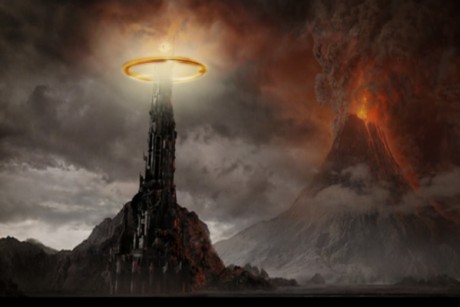
As bad lots go, you can’t get much worse than the hordes of Mordor from J.R.R. Tolkien’s “The Lord of the Rings.” Led by an utterly evil disembodied entity who manifests himself as a gigantic, flaming, pitiless eye, and composed of loathsome orcs (or goblins), trolls and foreigners, Mordor’s armies are ultimately defeated and wiped out by the virtuous and noble elves, dwarfs, ents and human beings — aka the “free peoples” — of Middle-earth. No one sheds a tear over Mordor’s downfall, although the hobbit Sam Gamgee does spare a moment to wonder if a dead enemy soldier is truly evil or has simply been misguided or coerced into serving the dark lord Sauron.
Well, there’s two sides to every story, or to quote a less banal maxim, history is written by the winners. That’s the philosophy behind “The Last Ringbearer,” a novel set during and after the end of the War of the Ring (the climactic battle at the end of “The Lord of the Rings”) and told from the point of view of the losers. The novel was written by Kirill Yeskov, a Russian paleontologist, and published to acclaim in his homeland in 1999. Translations of the book have also appeared in other European nations, but fear of the vigilant and litigious Tolkien estate has heretofore prevented its publication in English.
That changed late last year when one Yisroel Markov posted his English translation of “The Last Ringbearer” as a free download. Less polished translations of brief passages from the book had been posted earlier on other sites, but Markov’s is the “official” version, produced with the cooperation and approval of Yeskov himself. Although the new translation’s status as a potential infringement of the Tolkien copyright remains ambiguous, it may be less vulnerable to legal action since no one is seeking to profit from it.
The novel still has some rough edges — most notably, a confused switching back and forth between past and present tense in the early chapters — and some readers may be put off by Yeskov’s (classically Russian) habit of dropping info-dumps of military and political history into the narrative here and there. For the most part, though, “The Last Ringbearer” is a well-written, energetic adventure yarn that offers an intriguing gloss on what some critics have described as the overly simplistic morality of Tolkien’s masterpiece.

Mysterious Elk-Shaped Structure Discovered in Russia -

Mysterious Elk-Shaped Structure Discovered in Russia - Yahoo! News

Mysterious Elk-Shaped Structure Discovered in Russia

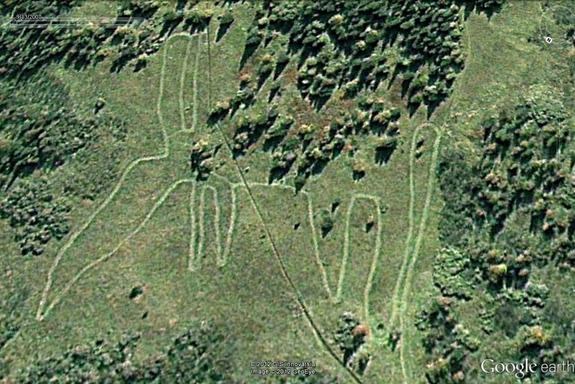
A huge geoglyph in the shape of an elk or deer discovered in Russia may predate Peru's famous Nazca Lines by thousands of years.
The animal-shaped stone structure, located near Lake Zjuratkul in the Ural Mountains, north of Kazakhstan, has an elongated muzzle, four legs and two antlers. A historical Google Earth satellite image from 2007 shows what may be a tail, but this is less clear in more recent imagery.
Excluding the possible tail, the animal stretches for about 900 feet (275 meters) at its farthest points (northwest to southeast), the researchers estimate, equivalent to two American football fields. The figure faces north and would have been visible from a nearby ridge.
"The figure would initially have looked white and slightly shiny against the green grass background," write Stanislav Grigoriev, of the Russian Academy of Sciences Institute of History & Archaeology, and Nikolai Menshenin, of the State Centre for Monument Protection, in an article first detailing the discovery published last spring in the journal Antiquity. They note that it is now covered by a layer of soil.
Fieldwork carried out this past summer has shed more light on the glyph's composition and date, suggesting it may be the product of a "megalithic culture," researchers say. They note that hundreds of megalithic sites have been discovered in the Urals, with the most elaborate structures located on a freshwater island about 35 miles (60 km) northeast of the geoglyph. [See Photos of Russia's Nazca Lines]
Discovery & excavation
A man named Alexander Shestakov first discovered the glyphs using satellite images. He alerted researchers, who sent out a hydroplane and paraglider to survey the giant structure.
This has since progressed to an on-the-ground excavation by a team led by Grigoriev. They've found that the stone architecture of the geoglyph is quite elaborate. When they excavated part of a hind leg the largest stones were on the edges, the smaller ones inside. This past summer they also found the remains of passageways and what appear to be small walls on the hoof and muzzle of the animal.
"The hoof is made of small crushed stones and clay. It seems to me there were very low walls and narrow passages among them. The same situation in the area of a muzzle: crushed stones and clay, four small broad walls and three passages," Grigorievwrote in an email to LiveScience. He cautioned that his team didn't excavate all the way down to the bottom of the walls, not wishing to damage the geoglyph.
Dating the geoglyph
Among the finds from the excavations are about 40 stone tools, made of quartzite, found on the structure's surface. Most of them are pickaxe-like tools called mattocks, useful for digging and chopping. "Perhaps they were used to extract clay," he writes in the email.
The style of stone-working called lithic chipping used on one artifact dates it to the Neolithic and Eneolithic (sixth to third millennia B.C.), though Grigoriev says the technology is more typical of the Eneolithic, between the fourth and third millennia B.C.
If that date is correct, it would make the geoglyph far older than Peru's Nazca Lines, the very earliest of which were created around 500 B.C. Grigorievadded that current studies of ancient pollen at the site will help to narrow down the age. [Gallery: Aerial Photos Reveal Mysterious Stone Structures]
In the Antiquity journal article, Grigoriev and Menshenin point out that palaeozoological studies show that the landscape in the southern Urals supported fewer trees in the Eneolithic, with forest growth not appearing until about 2,500 years ago. "This means that there were open landscapes in the Eneolithic and Bronze Age, which allowed the hill figure to be created," they write.
A megalithic culture
Researchers say this geoglyph may have been built by a "megalithic culture" in the region that created stone monuments in prehistoric times.
"[M]any megalithic sites with features in common with European megaliths have been located: Some 300 are known but have not yet been studied in detail," write Grigoriev and Menshenin in the Antiquity article. Among these megaliths are numerous "menhirs," large upright standing stones.
The most spectacular megalithic complexes are on the relatively small Vera Island, located on Turgoyak Lake, about 35 miles (60 km) northeast of the geoglyph.
Grigoriev and Julia Vasina of the South-Ural State University described the Vera Island megaliths in a 2010 article, noting the surviving portion of one monument, megalith two, as being covered by a mound and supporting a gallery and square chamber. Another monument, megalith one, is cut into the bedrock and covered by a mound consisting of stones, brown sand and lots of grass. It is more than 60 feet (19 meters) long and 20 feet (6 meters) wide. It contains three chambers one of which has "bas relief sculptures" in the shape of animals, probably a bull and wolf.
Stone tools and ceramics found at the megalithic sites date them to between the Eneolithic period and the early Iron Age, around 3,000 years ago. Researchers emphasize more dating work needs to be done to verify; however, if the evidence holds, the giant geoglyph, along with the megaliths, were constructed millennia before Peru's Nazca Lines, a testament to the building prowess of an ancient prehistoric culture in the Ural Mountains.

Star Trek Catan lets you settle where no one has settled before » Coolest Gadgets

Star Trek Catan lets you settle where no one has settled before » Coolest Gadgets

Celebrate National Fossil Day On October 17

Celebrate National Fossil Day On October 17 - Science News - redOrbit

National Fossil Day Promotes Public Awareness And Stewardship Of Fossils

October 14, 2012
Repost This
18
10
0
April Flowers for redOrbit.com – Your Universe Online
October 17, 2012 is National Fossil Day, sponsored by the National Park Service (NPS) and the American Geological Institute (AGI). This year is the third annual event, scheduled in conjunction with Earth Science Week.
The mission of National Fossil Day is to promote public awareness and stewardship of fossils. The NPS hopes to foster an appreciation of the scientific and educational value of fossil preservation and study.
“Fossils discovered on the nation’s public lands preserve ancient life from all major eras of Earth’s history, and from every major group of animal or plant. In the national parks, for example, fossils range from primitive algae found high in the mountains of Glacier National Park, Montana, to the remains of ice-age animals found in caves at Grand Canyon National Park, Arizona. Public lands provide visitors with opportunities to interpret a fossil’s ecological context by observing fossils in the same place those animals and plants lived millions of years ago.”
Over 237 National Park Service areas preserve fossils.
Each year, the NPS hosts an Art and Photo Contest. This year, the theme for the contest was “Careers in Paleontology.” The contest is already being judged for this year, and the winner’s artwork will be displayed on the National Fossil Day website after October 16, 2012.
The 2012 Logo depicts a Mammoth, and each month this year the NPS is highlighting a “mammoth” partner. October’s partner is The Mammoth Site in Hot Springs, SD.
There will be events at Bureau of Land Management and National Parks facilities across the nation. One of the largest will be held at the National Mall in Washington, D.C. on October 17, from 10am to 2pm. There will be activities for all ages and educational levels, from becoming a Junior Paleontologist, washing/screening for your own fossils to an ancient version of the “Antiques Roadshow” where you can bring any fossils you have found to have them identified by experts.
Check your state to see if there is a National Fossil Day event near you.

Source: April Flowers for redOrbit.com - Your Universe Online

redOrbit (http://s.tt/1q0Kb)

Thursday, October 11, 2012

Board game tournament for World Hunger Relief on October 20th in Windsor - Toronto board games | Examiner.com

Board game tournament for World Hunger Relief on October 20th in Windsor - Toronto board games | Examiner.com

Board game tournament for World Hunger Relief on October 20th in Windsor

The Windsor Gaming Resource, Kentucky Fried Chicken, and Hugin & Munin are pleased to announced a charity board gaming event being held on the 20th of October with a noon start time.
There is a $5 entry fee for this event which is being donated to help with World Hunger Relief.
There will be four rounds. In between round 2 and 3 there will be a dinner break, you are welcome to bring your own food or there's a ton of great places to eat in the area.
Each round points will be awarded for 1st, 2nd, 3rd and 4th place. Anyone who has played in any of the Great Canadian Board Game Blitz events will be familiar with the format.
Prizes:
1st place - $30 Hugin and Munin Gift Certificate and 15pc KFC Meal
2nd place - $20 Hugin and Munin Gift Certificate and 8pc KFC Meal
3rd place - $10 Hugin and Munin Gift Certificate and 4pc KFC Meal
© 2012 Microsoft Corporation© 2012 Nokia
Hugin & Munin
42.30151; -82.998733
Hugin & Munin
1664 Tecumseh Rd. East
Windsor, Ontario, N8W 1C5, Canada
Tel: (519) 974-7898

Ph.D. in Batman? First doctorate in comics to be awarded - books - TODAY.com

Ph.D. in Batman? First doctorate in comics to be awarded - books - TODAY.com
Ph.D. in Batman? First doctorate in comic books to be awarded

Producer of the Dark Knight movie trilogy will receive honorary degree from Monmouth University

newsandexperts.com
Michael Uslan, originator and executive producer of the Batman film franchise since 1989, will receive the world’s first fine arts doctorate in comic books on Oct. 10.
By
TODAY
updated 10/8/2012 2:50:02 PM ET2012-10-08T18:50:02
When Michael Uslan was a boy, he watched the stuff that dreams are made of literally go up in smoke.
A friend’s father, who shared the dim view of comic books most grown-ups held in the 1950s and ’60s, burned his son’s collection in his fireplace as young Michael watched in horror. Uslan estimates that the comics he saw consumed in flames that day, which included Spider-Man’s first appearance, would be worth hundreds of thousands of dollars today.
“There were comic book burnings in various towns,” Uslan told TODAY.com. “In postwar America, comics were blamed for juvenile delinquency and, my favorite, asthma, because comic book readers stayed indoors to read instead of playing outside in the fresh air.”
Story: DC do-over: Superman and friends start over from scratch
Despite all that, Uslan grew up to not only write comic books, but become the originator and executive producer of the “Batman” film franchise, which has brought in nearly $1.9 billion at the box office since 1989. But soon he will receive vindication that, if possible, may actually be sweeter: On Oct. 10, he’ll receive the world’s first fine arts doctorate in comic books, conferred by Monmouth University, a stone’s throw from where he grew up the son of a stonemason in New Jersey.
That degree will close a wide circle for Uslan, who in 1971 taught the world’s first accredited college course in comics, at Indiana University.
“One of my life’s goals is to make the world aware that comics are an indigenous American art form, as legitimate as jazz,” he told TODAY.com. As the modern equivalent of ancient mythology and a mirror to society, he maintains, comics are “contemporary American folklore.”
  1. More in books
    1. ‘Who I Am’: Rock icon Pete Townshend tells his story
    2. ‘Heaven Changes Everything’: How belief impacted a family
    3. The sequel to ‘The Giver’ is finally here
    4. ‘Killing Kennedy’: The crime that changed America
    5. Prom: An American rite of passage
But reaching for that goal has been no easy task. “When I first got out to Hollywood with Batman, I was rejected by every single studio,” he told TODAY.com. “The prejudice was incredible.”
That changed with the release of “Batman” starring Michael Keaton in 1989. Uslan feels “the first film by Tim Burton was revolutionary” in conveying the original vision of Batman as a dark avenger of the night, not the campy buffoon who cavorted on TV in the late 1960s.
Gay characters take center stage in comic books
And that vision, he believes, culminated in the three Christian Bale Batman films directed by Christopher Nolan (“Batman Begins,” “The Dark Knight” and this year’s “The Dark Knight Rises”). “What Chris has done has been to elevate the comic book movie,” Uslan said. “People say ‘that was a great film,’ not ‘that was a great comic book movie.’”
So, in homage to his hero, will “The Boy Who Loved Batman” (as Uslan’s memoir is titled), dress up like the Dark Knight to collect his degree?
“They’re putting me up there in the black robe, and I’m hoping it will be pointy like Batman’s cape,” Uslan said with a laugh. “If not, maybe I can wear Batman Underoos underneath.”
© 2012 MSNBC Interactive. Reprints

NASA - NASA's Ironman-Like Exoskeleton Could Give Astronauts, Paraplegics Improved Mobility and Strength

NASA - NASA's Ironman-Like Exoskeleton Could Give Astronauts, Paraplegics Improved Mobility and Strength
NASA's Ironman-Like Exoskeleton Could Give Astronauts, Paraplegics Improved Mobility and Strength


exoskeleton Project Engineer Roger Rovekamp demonstrates the X1 Robotic Exoskeleton for resistive exercise, rehabilitation and mobility augmentation in the Advanced Robotics Development Lab.
Image courtesy of Robert Markowitz
› Link to larger photo

exoskeleton Project Engineer Shelley Rea demonstrates the X1 Robotic Exoskeleton.
Image courtesy of Robert Markowitz
› Link to larger photo
Marvel Comic's fictional superhero, Ironman, uses a powered armor suit that allows him superhuman strength. While NASA's X1 robotic exoskeleton can't do what you see in the movies, the latest robotic, space technology, spinoff derived from NASA's Robonaut 2 project may someday help astronauts stay healthier in space with the added benefit of assisting paraplegics in walking here on Earth.

NASA and The Florida Institute for Human and Machine Cognition (IHMC) of Pensacola, Fla., with the help of engineers from Oceaneering Space Systems of Houston, have jointly developed a robotic exoskeleton called X1. The 57-pound device is a robot that a human could wear over his or her body either to assist or inhibit movement in leg joints.

In the inhibit mode, the robotic device would be used as an in-space exercise machine to supply resistance against leg movement. The same technology could be used in reverse on the ground, potentially helping some individuals walk for the first time.

"Robotics is playing a key role aboard the International Space Station and will continue to be critical as we move toward human exploration of deep space," said Michael Gazarik, director of NASA's Space Technology Program. "What's extraordinary about space technology and our work with projects like Robonaut are the unexpected possibilities space tech spinoffs may have right here on Earth. It's exciting to see a NASA-developed technology that might one day help people with serious ambulatory needs begin to walk again, or even walk for the first time. That's the sort of return on investment NASA is proud to give back to America and the world."

Worn over the legs with a harness that reaches up the back and around the shoulders, X1 has 10 degrees of freedom, or joints -- four motorized joints at the hips and the knees, and six passive joints that allow for sidestepping, turning and pointing, and flexing a foot. There also are multiple adjustment points, allowing the X1 to be used in many different ways.

X1 currently is in a research and development phase, where the primary focus is design, evaluation and improvement of the technology. NASA is examining the potential for the X1 as an exercise device to improve crew health both aboard the space station and during future long-duration missions to an asteroid or Mars. Without taking up valuable space or weight during missions, X1 could replicate common crew exercises, which are vital to keeping astronauts healthy in microgravity. In addition, the device has the ability to measure, record and stream back, in real-time, data to flight controllers on Earth, giving doctors better feedback on the impact of the crew's exercise regimen.

As the technology matures, X1 also could provide a robotic power boost to astronauts as they work on the surface of distant planetary bodies. Coupled with a spacesuit, X1 could provide additional force when needed during surface exploration, improving the ability to walk in a reduced gravity environment, providing even more bang for its small bulk.

Here on Earth, IHMC is interested in developing and using X1 as an assistive walking device. By combining NASA technology and walking algorithms developed at IHMC, X1 has the potential to produce high torques to allow for assisted walking over varied terrain, as well as stair climbing. Preliminary studies using X1 for this purpose have already started at IHMC.

"We greatly value our collaboration with NASA," said Ken Ford, IHMC's director and CEO. "The X1's high-performance capabilities will enable IHMC to continue performing cutting-edge research in mobility assistance while expanding into the field of rehabilitation."

The potential of X1 extends to other applications, including rehabilitation, gait modification and offloading large amounts of weight from the wearer. Preliminary studies by IHMC have shown X1 to be more comfortable, easier to adjust, and easier to put on than previous exoskeleton devices. Researchers plan on improving on the X1 design, adding more active joints to areas such as the ankle and hip, which will, in turn, increase the potential uses for the device.

Designed in only a few years, X1 came from technology developed for Robonaut 2 and IHMC's Mina exoskeleton.

NASA's Game Changing Development Program, part of NASA's Space Technology Program, funds the X1 work. NASA's Space Technology Program focuses on maturing advanced space technologies that may lead to entirely new approaches for space missions and solutions to significant national needs.

For additional information about IHMC, visit:

http://www.ihmc.us

For information about the X1 and Robonaut, visit:

http://www.nasa.gov/robonaut

Can Dungeons & Dragons Make You A Confident & Successful Person?