Tuesday, January 15, 2013

How to make armour

How to make armour


Choose the design that best suits you the best. A few years ago, finding anything about trebuchets was pretty difficult, but these days there are many websites and several books that offer detailed building plans.

Draft the trebuchet's front, side and top view. The drawing must be to scale. This way you will have a clear idea what the finished project will look like and how much space it will occupy.

Draft plans for each of the trebuchet's components. A trebuchet consists of six basic components: base frame, upright supports, runway, swinging arm, counterweight bucket and sling.


Building the Base Frame


Put on your safety goggles. Cut three four-by-fours to a length of 4 feet on your table saw. Put the leftover 2-foot pieces to the side. One of the four-foot pieces is the base frame's front, another its back and the last one its central parallel brace.

Cut the leftover 2-foot pieces into four 1-foot long pieces on the table saw. Cut one four-by-four into two 4 foot long pieces. Place one of them to the side. Cut the remaining one into four 1 foot long pieces. You now have eight 1 foot long sections of four-by-four. Set the table saw's frame to a 45 degree angle. Cut off both corners of each 1-foot piece so that you have eight trapezoids with a 1 foot long base. These are the base frame's corner support braces.

Return the table saw's frame to the original setting. Set the blade's height to 1 3/4 inches. That's half a four-by-four's width. Cut the 4 foot long pieces at 3 1/2 inches and 44 1/2 inches. The frame will be put together with lap joints, so you're not cutting all the way through the lumber. Make four cuts into the 6-foot lengths: at 3 1/2 inches, at 34 1/4 inches, at 37 3/4 inches and at 68 1/2 inches. Make three additional cuts at equal intervals between the two cuts in the center. Punch out those central sections with the wood chisel and mallet.

Set the band saw's fence to 1 3/4 inches. Cut the ends of the 4-foot and 6-foot lengths so that each lumber's end has an L-shaped section cut out. All L-shapes must be on the same side.

Place the base frame's sides on top of the front and back end pieces and the central parallel support. Attach a Phillips head drill bit to your power drill and secure each joint with four 3-inch deck screws. Position the diagonal braces at the base frame's corners and to each side of the central parallel support. Secure each diagonal brace with 3-inch deck screws.

Building the Runway


Set the table saw's fence to 4 inches. On the table saw, cut one of the dimensional lumbers lengthwise. These two sheets are the runway's sides.

Make pencil marks on the base frame's front, back and central parallel support at exactly 20 inches and 28 inches. Align the 8 inch wide dimensional lumber with the pencil marks. Make sure it is precisely parallel with the base frame's sides. This is crucial to the finished trebuchet's accuracy. Secure it to the base frame with deck screws.

Cut six right-angled squares with 4 inch sides from your wood scraps. Secure these triangles with nails to the runway side pieces at 2 inches, 36 inches and 70 inches. Make sure that the right angles are all on the same side.

Place the runway side pieces against the 8 inch wide dimensional lumber. Fasten the triangular support brackets to the base frame with nails.

Buiding and Securing the Upright Supports


Cut six pieces of four-by-four to a length of 2, feet 9 inches on the table saw. Put two of these pieces to the side. These are the upright supports. The other for pieces are the support braces. Set the table saw's fence to a 135 degree angle. Cut the support braces along the top. Set the table saw's fence to a 64 degree angle. Cut the support braces along the bottom.

Draw a pencil line across the top of each upright support at 1 3/4 inches. Carry that line over to each of the support's sides. The line needs to drop down 1 3/4 inches. Mark the end of each line with an "X". Attach a drill bit to your power drill. Drill straight through the lumber, making sure you drill through the center of each "X." Attack the keyhole bit to the drill. Using the hole you just drilled as a pilot, drill as deeply into the wood as you can from both sides. You won't be able to cut entirely through the lumber. Punch out the center with the mallet. Remove all splinters with the wood rasps.

Make a pencil line across the upright support's top portion at 1 3/4 inches. That's halfway across the circle you just punched out. Cut off the top section on the band saw along this line.

Making the Axle and Swinging Arm


Draw an "X" across each end of your 4-foot four-by-four. With the compass, draw a 1 1/4 inch circle at the center of each "X." Draw a pencil line 3 1/2 inches from each end across all four sides of the lumber. Cut an octagonal shape around each circle's perimeter to the 3 1/2 inch line. Punch out the pieces around the octagon with the chisel and mallet. Round off the edges with the wood rasps so that you have perfect 3 1/2 inch cylinders on each end.

Set the table saw's blade to a height of 1 3/4 inches. Make cuts at 21 1/4 inches and 23 3/4 inches. Make three additional cuts at equal intervals between these cuts. Punch out the center sections with the chisel and mallet.

Cut a four-by-four to a length of 5 1/2 feet on the table saw. Set the table saw's blade to a height of 1 3/4 inches. Make a cut at 27 inches from the swinging arms front end and another at 30 1/2 inches. Make three additional cuts at equal intervals between these t two cuts. Punch out the center sections with the chisel and mallet.

Cut a 1 inch wide, 1 inch deep mortise into the swinging arm's back. Make the cuts on the band saw. Punch out the center with the chisel and mallet. The mortise must be vertical, not horizontal. Drill a hole through the swinging arm 1/2 inch from the top and 1/2 inch from the back, so that it punches through the entire mortise. Fasten a 3/4 inch eye hook to the top of the swinging arm, 1 inch below the mortise.

Building the Counterweight Bucket and Attaching the Aiming Pin


Place the 3 1/2 inch wide dimensional lumber on the table saw. Cut two 1-foot lengths, one 1 1/2-foot length and two 7 3/4 inch lengths. Cut the plywood to two rectangles, 1 foot x 1 1/2 feet.

Center one of the 1 1/2 foot long dimensional lumbers on the swinging arm's front end. Secure it with three 3 inch deck screws. This is the bottom of the counterweight bucket. The plywood rectangles are its sides. Secure them to the swinging arm and bottom with 3 inch deck screws at 2 inch intervals. Secure the 1 foot long lumbers to the bucket's front and back in the same manner.

Attach the 1 inch keyhole bit to the drill. Drill out a 1 inch wheel from the 1 inch thick dimensional lumber. Attach a 1/2 inch drill bit to the drill. Drill a 1/2 inch deep hole onto the wheel's side. Place the dowel into the hole and secure it with wood glue.

Place the wheel into the mortise at the end of the swinging arm so that the dowel points up. Secure it with a 4 inch bolt, two washers and a nut.

Final Assembly


Cut two 4 1/2 foot lengths of nylon rope. Cut an 16 inch long, 6 inch wide diamond from the denim cloth. Tie the diamond's front corner to one length of rope, the back corner to the other. Secure one nylon rope to the swinging arm's eye hook. You now have one free end of nylon rope. Tie this end into a 1 inch hoop. This hoop will hook onto the aiming pin when the trebuchet it loaded and ready to fire.

Place the axle onto the upright supports. Replace the upright support tops and fasten them with straight brackets and 1/2 inch wood screws. Make sure the axle can move freely before tightening the screws. Hang the swinging on the axle, mortise to mortise. Drill four holes through the mortise joint. Fasten the swinging arm to the axle with four 4 inch bolts, washers and nuts.

Fill the counterweight bucket with cat litter. Secure the two 7 1/4 inch pieces of dimensional lumber to the bucket's top with 3 inch deck screws.

Fasten a 3/4 inch eye hook to the top of the trebuchet's left runway rail, 6 inches from the trebuchet's rear. Cut a 6 foot length of nylon rope. Drill a hole into the center of each runway rail, 6 inches from the rear. This is the trebuchet's firing mechanism.

Good Luck - Result will look like the below photo


How Things Work : How Does a Trebuchet Work?


Possible 9-foot model of Brunelleschi’s dome found

The History Blog » Blog Archive » Possible 9-foot model of Brunelleschi’s dome found

Possible 9-foot model of Brunelleschi’s dome found

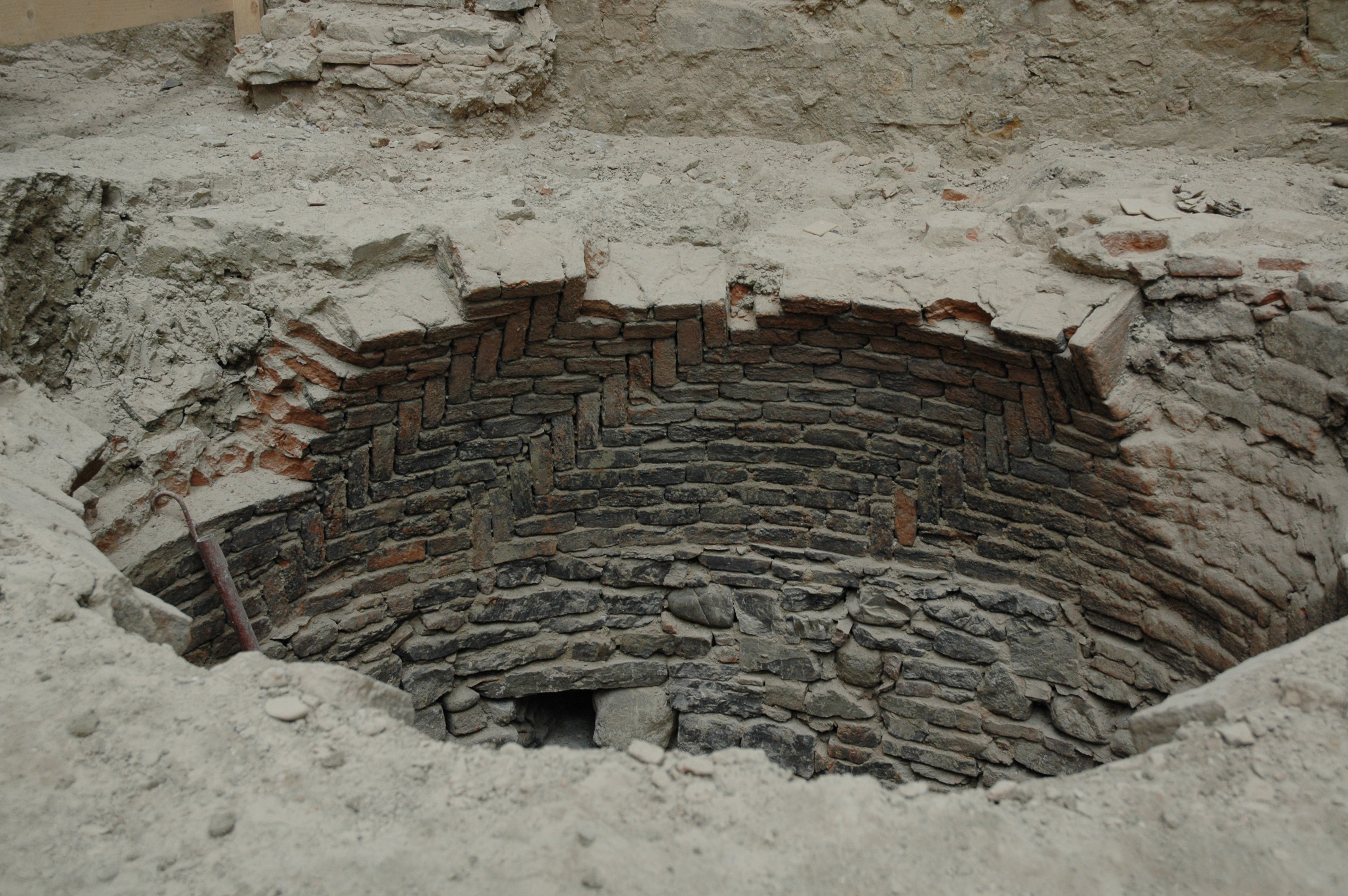
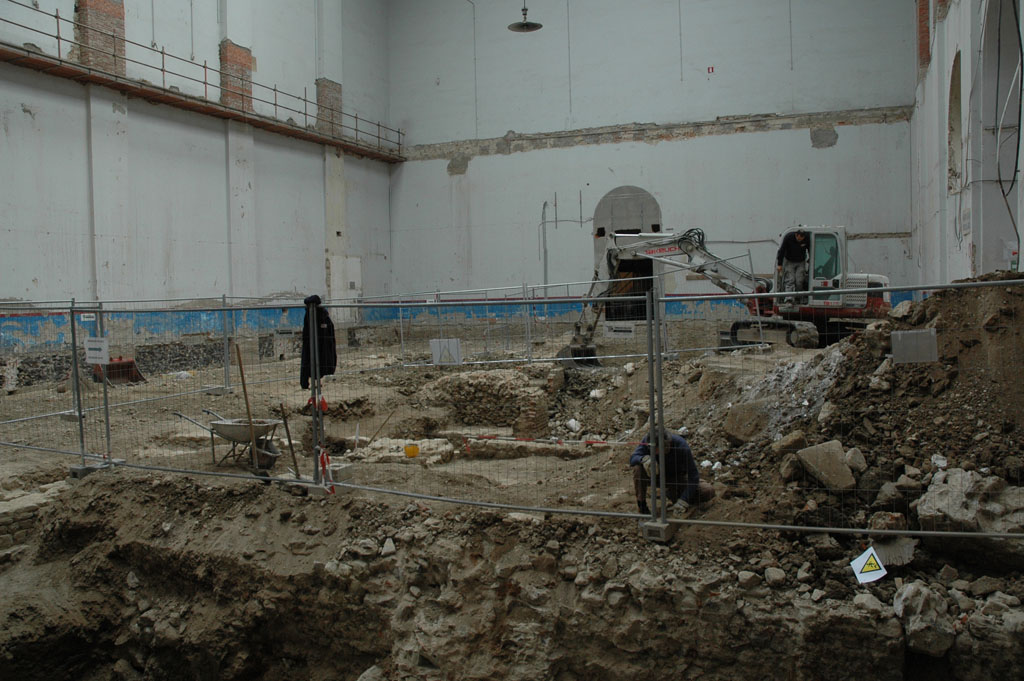
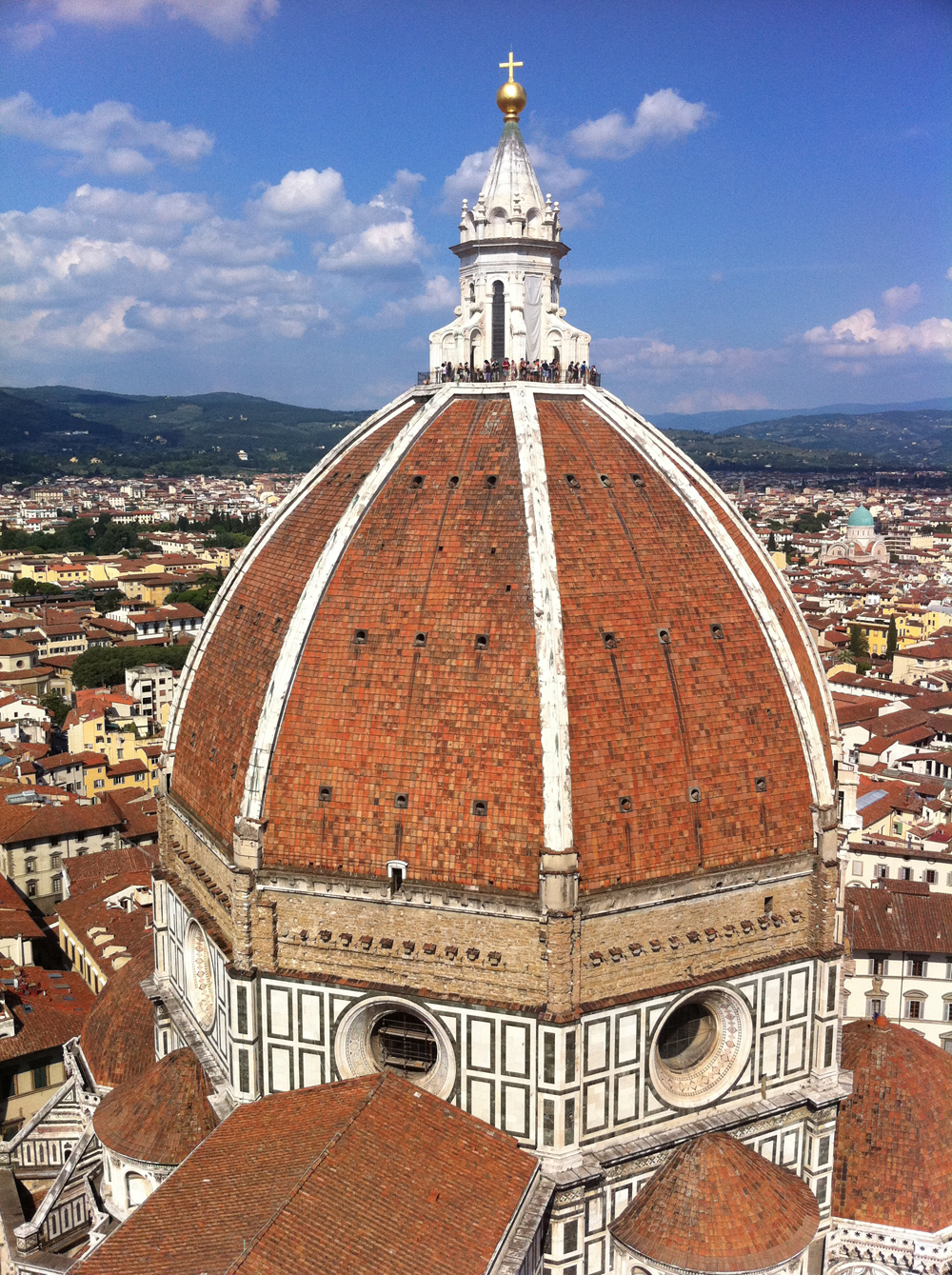
Archaeologists excavating inside an 18th century theater slated to become an addition to the Museum of the Works of the Cathedral in Florence have discovered what appears to be a builder’s model of the cathedral’s famous dome. The mini-dome is nine feet in diameter and features bricks laid in a herringbone pattern, a unique characteristic of the dome designed and built by architect and engineer Filippo Brunelleschi.
It was found in a layer two-and-a-quarter feet below surface level which contains copious metal and marble fragments from the period when the space was used as a construction workshop during the late 14th and 15th centuries, the same time when Brunelleschi was working on his dome. Herringbone brickwork had been used before in Persian domes, but Brunelleschi’s was the first in Europe, which means this model may be the first brick herringbone dome built on the continent.
The dome of Santa Maria del Fiore was built between 1420 and 1436, and the herringbone pattern was one of the key elements to Brunelleschi’s brilliant design. An octagonal dome had been planned for the cathedral by Arnolfo di Cambio in 1296, but even as the rest of the church was built, the dome never moved past the model phase. The decision to eschew Gothic buttresses in favor of a classical dome was made when the design of architect Neri di Fioravante was accepted in 1367. That left the Duomo’s builders with a dilly of a pickle: how to build a huge octagonal dome without elaborate scaffolding that would make the interior of the church unusable and without exterior buttresses.
In 1418 the wool guild sponsored a contest to solve the thorny problem. Brunelleschi studied the dome of the Pantheon in Rome — still today the largest unreinforced concrete dome in the world — but he couldn’t use the Pantheon’s techniques for the Duomo dome. The Roman recipe for concrete was lost, for one thing, and for another, it had required massive wooden forms to keep the dome standing while the concrete dried. There literally wasn’t enough timber in Tuscany to scaffold and frame even a masonry dome 144 feet in diameter. Also the outer walls of the cathedral had already been built, and there was no way they could withstand the compression forces of a massive, heavy dome. Besides, there was still the stricture that the interior of the church had to be open to the public during construction.
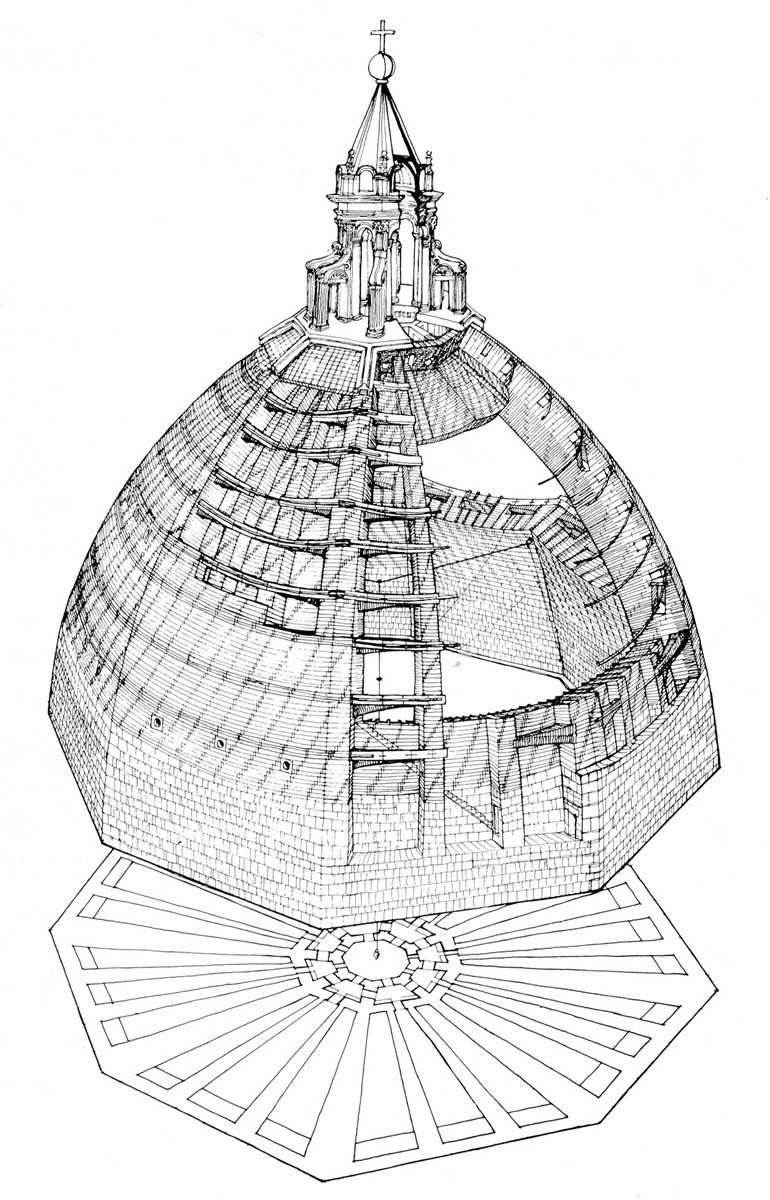
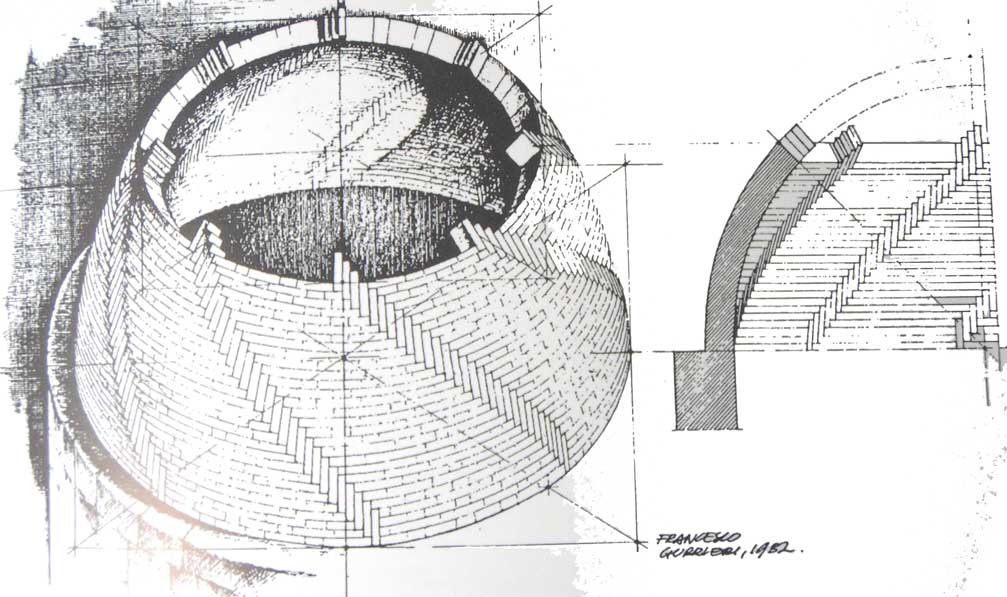
Brunelleschi’s solution was brickwork rather than concrete or stone. He built wooden vertical ribs that curved upwards from each corner of the octagonal base. The ribs had slits that wooden planks could be attached to, and then terrifying skinny platforms built off the planks for workers to use building the dome without the need for scaffolding. The bricks were then laid in a diagonal herringbone pattern that would transfer the weight of the bricks to nearest vertical rib while the mortar was drying instead of pressing downwards and collapsing onto the heads of assembled worshipers.
Even today there are many questions about how he accomplished this extraordinary feat of architecture. Brunelleschi kept his overall plan close to his chest, releasing snippets on a need-to-know basis so he couldn’t be easily replaced. The discovery of a brick and mortar model (as opposed to the small mock-up style model which is on display at the Museum of the Works of the Cathedral) could add to our understanding of Brunelleschi’s methods.
Unfortunately the top of the mini-dome is missing, probably sheared off during the construction of the theater in 1779. The theater was commissioned by the Grand Duke of Tuscany Peter Leopold, son of Maria Theresa of Austria and future Holy Roman Emperor. It replaced the many workshops used by artisans and craftsmen employed by the Works of the Cathedral since the Middle Ages, one of which may well have been the place where Michelangelo sculpted the David. The Theater of the Intrepids became known for its low-brow entertainment, raucous audiences and wholly crappy acoustics.
In the 1900s the theater was gutted and used as a garage until it was purchased by its former owners, the Works of the Duomo, in 1998. For the next decade or so, the organization used it for storage and as a restoration laboratory. In 2009, construction began to transform the space into an adjunct space for the museum. The new addition is scheduled to open in 2015. The newly discovered domelet will be fully excavated, restored as much as feasible and put on display in the new museum.

Building scale.

Subscribe to our YouTube channel. Sauron commands it. http://bit.ly/X5bAam

Art by Boxmang: http://boxmang.deviantart.com/#/d4xvgpm

Shared by Boicho Husha
How things size up.

Sunday, January 13, 2013

Game Of Thrones Season 3: Three-Eyed Raven Tease


1000-year-old Sri Lankan temple step found in Devon garden

The History Blog » Blog Archive » 1000-year-old Sri Lankan temple step found in Devon garden

Imagine an elder sign or portal stone kepted unknown in someones garden until the stars are right.

1000-year-old Sri Lankan temple step found in Devon garden


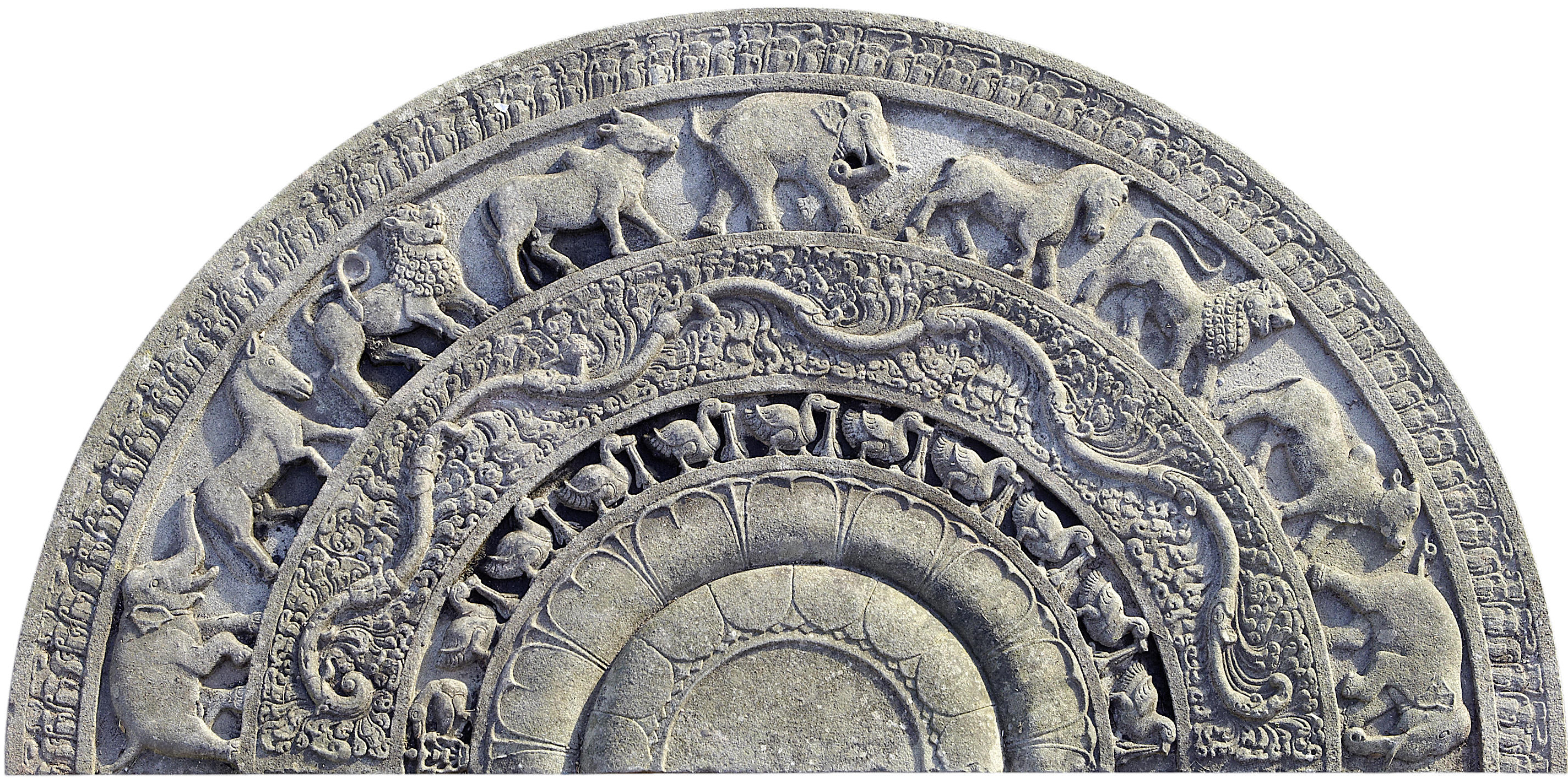
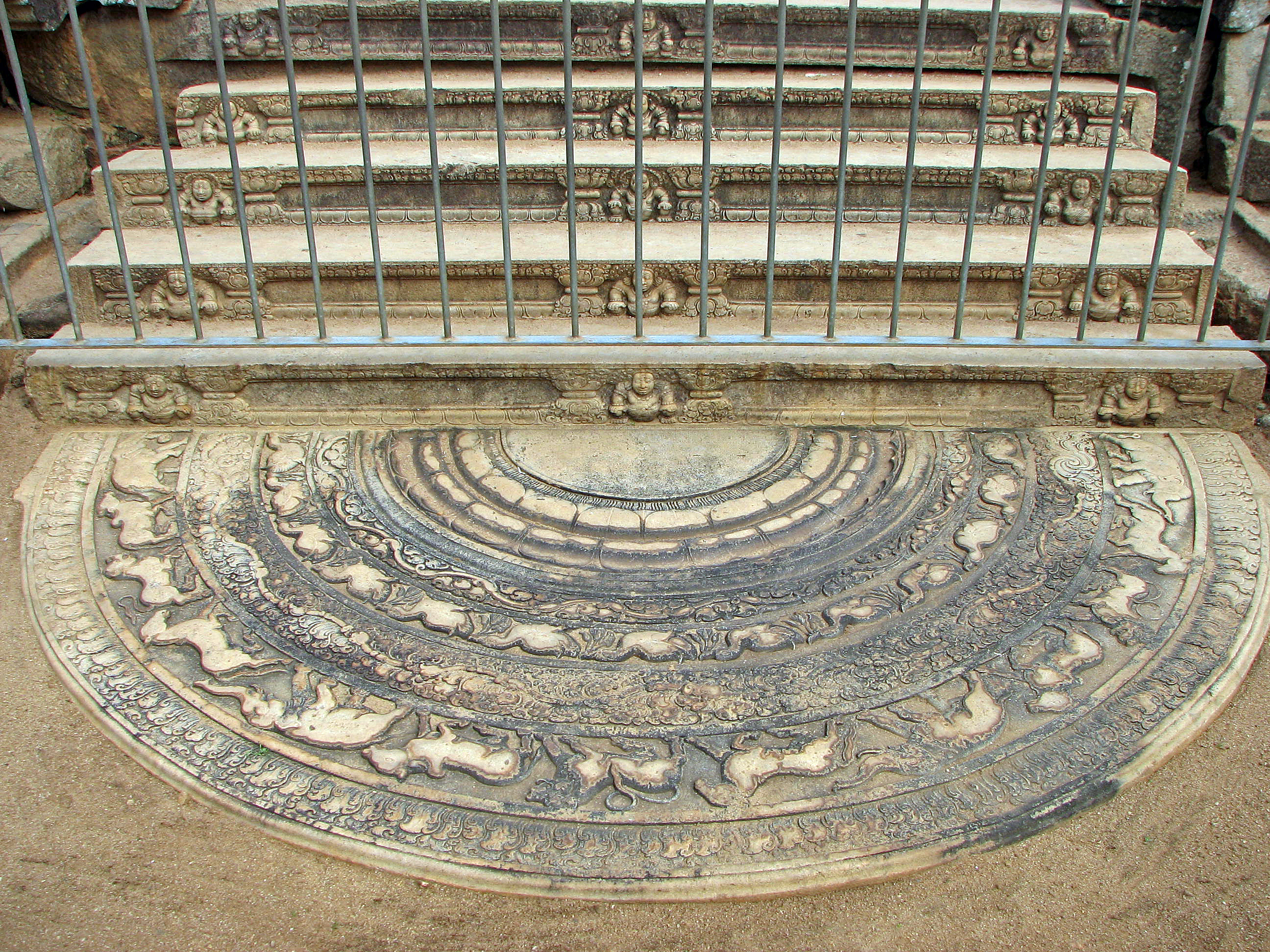
A Sandakada pahana, a beautifully carved semi-circular granite slab which a thousand years ago graced the entrance to a temple in Anuradhapura, a sacred Buddhist city and a capital of Sri Lanka from the 4th century B.C. to the 11th century A.D., has been found in the garden of a modest bungalow in Devon. Sam Tuke, an appraiser at Bonhams, happened to hear about it from a woman who was in the office picking up something else. When she mentioned the elaborate carvings of animals which she had loved tracing with her fingers since she was a small child, the expert was intrigued. The client brought him a picture of it the next day and he realized it was something special.
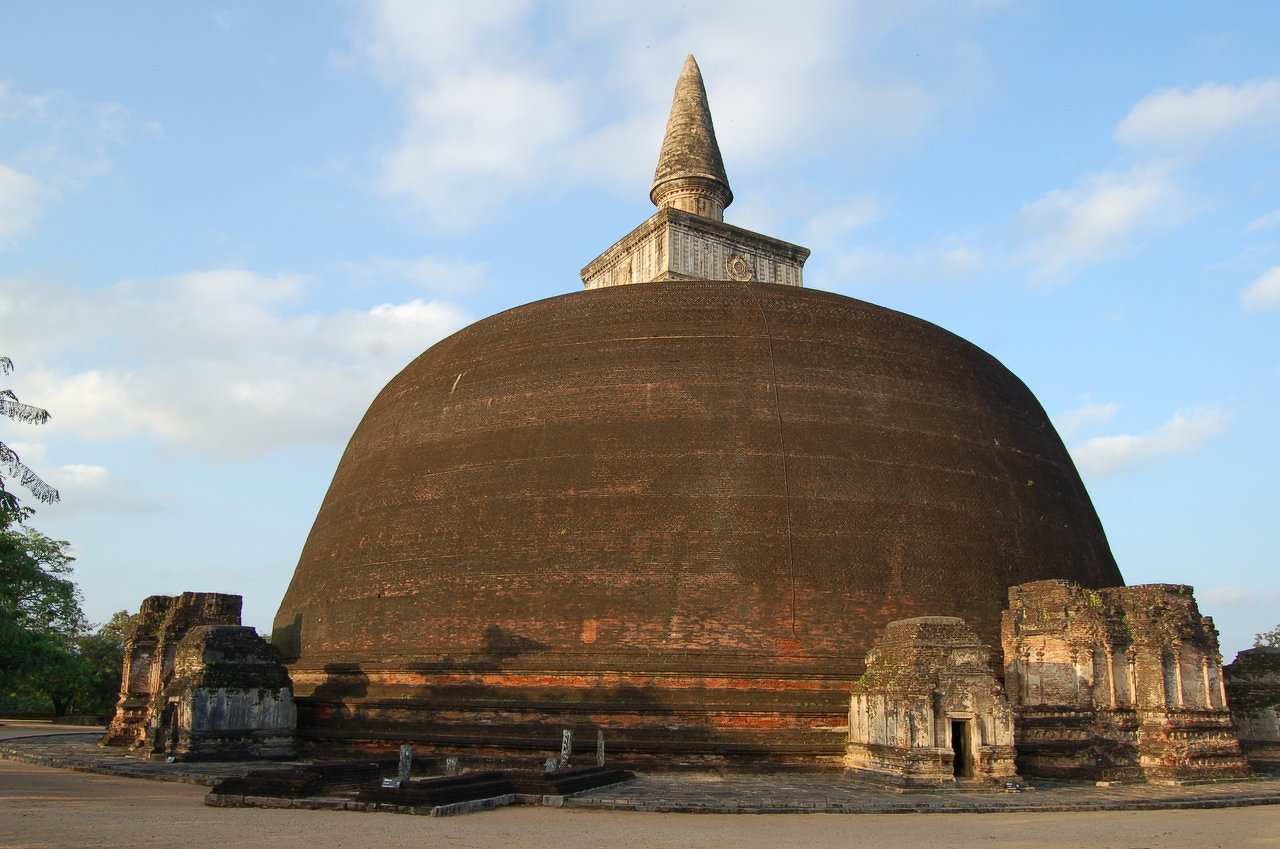
It is so special, in fact, that it’s one of only seven of its kind. The other six are all still the first steps to stupas (spired dome temples representing the enlightened mind of the Buddha) in Anuradhapura. The tradition of the elaborately carved first step goes all the way to the dawn of Buddhism. According to tradition, the practice began in India when the Buddha was still alive. A devotee had covered the floors of the temple he had built with expensive, richly patterned cloths. When another devotee wanted to do the same, Ananda, the Buddha’s personal attendant and first cousin, suggested she place them at the base of the temple steps. From then on, the first step would be a beautiful art work.
In Anuradhapura, this tradition took the form of carved stones. Sandakada pahana means half-moon stone in the Sinhala language and indeed all the steps are semi-circular in shape. The designs carved within the half-moon are laden in Buddhist symbolism, representing the life of the Buddha and the cycle of Samsara (birth, life, death and reincarnation). Within the half-moon are concentric half-circles carved with Buddhist symbols. In the center is a half lotus in bloom. The lotus represents purity of spirit as it floats unblemished above the mud of earthly attachment. When the Buddha was born, he took seven steps and at each step a lotus flower blossomed.
The next band is a line of geese (some call them swans, but swans aren’t native to the region and the creatures don’t have long necks). Geese are considered examples of ideal qualities — they aren’t vainly adorned like peacocks but they can fly to much greater heights, their migration shows a lack of attachment to home, they make pleasing sounds — and the Abhiniá¹£kramaṇa SÅ«tra tells the tale of a young Prince Siddhartha saving a goose which had been shot with an arrow by his cousin and nursing it back to health.
After the geese is a band of foliage called a liyavel, a stylized design symbolizing worldly desires, and after that is a parade of four animals: elephant, horse, lion and bull. They follow each other in that order representing the four phases of Buddha’s life.
The elephant represents the Buddha’s birth and growth. One night before he was a twinkle in her eye, his mother Queen Maya dreamed that a white elephant holding a lotus flower in its trunk walked around her three times then entered her womb. The white elephant, symbol of mental strength greatness, was the Buddha himself returning to life in his final incarnation as Prince Siddhartha. The horse represents energy and effort in the practice of dharma. Buddha rode his horse, Kanthaka, when he left the palace for good to live as an ascetic begging for alms. The lion symbolizes power and the teachings of the mature Buddha which are also known as “the Lion’s Roar.” The bull represents forbearance and the acceptance of death. An alternate interpretation of the four animals is that they represent the four mortal perils: birth (elephant), disease (lion), decay (bull) and death (horse).
The outermost band is a carving of stylized flames representing the fire of worldly existence.
The Sandakada pahanas were created towards the end of the Anuradhapura Kingdom. Sri Lanka was invaded by the Tamil Chola Empire of India in 993. Anuradhapura king Mahinda V, a weak ruler who made the fatal mistake of not paying his army, was finally captured in 1017. He was kept prisoner in India while the Chola army sacked the sacred city of Anuradhapura. They then moved the capital of Sri Lanka to Polonnaruwa tolling the final death knell of the Anuradhapura Kingdom. The city was abandoned and the jungle reclaimed the ruins.
It wasn’t forgotten, however. It had been written about extensively by ancient Roman (Pliny the Elder in Book VI, Chapter 24 of Natural History refers to the travelogue of Annius Plocamus whose servant was blown off course to Sri Lanka) and Chinese sources. In the 1820s and 30s, British colonial administrator Sir William Colebrooke describes the art and architecture of Anuradhapura, and a Sandakada pahana in particular, in glowing if Eurocentric terms.
“I saw here ornamented capitals and balustrades, and bas reliefs of animals and foliage. I cannot better express my opinion of their elegance than by saying that, had I seen them in a museum, I should, without hesitation, have pronounced them to be Grecian or of Grecian descent. One semicircular slab, at the foot of a staircase, is carved in a pattern of foliage which I have repeatedly seen in works of Greek and Roman origin.”
So how did this masterpiece of immense cultural importance find its way to a Devon bungalow? It was in the garden of the current owner’s childhood home in Sussex. Her parents had purchased the house from a tea planter in the 1950s, a tea planter would certainly have good reason to visit Sri Lanka, or Ceylon as it was then called, and in those days could easily have purchased some loot from Anuradhapura and brought it home.
When her parents died, the Sussex house was sold, but the owner of the stone couldn’t bear to leave behind a piece that had given her so much delight in the happy days of her youth. She took it with her. “The Pebble,” as the three-quarter ton, eight-foot by four-foot, six-inch-thick granite slab is known in the family, has moved with her five times since then. Now she’s parting with it for good, sadly. It will be sold at Bonham’s Indian and Islamic sale in London on April 23rd. They expect it will sell for at least £30,000 ($48,000), which seems very low to me considering its beauty and incalculable historic and cultural value.
I wish she’d donate it to a museum. It’s in such impeccable condition, which makes it even rarer than the six which remain in place since they’ve been stepped on by so many thousands of pilgrims and tourists.

Tuesday, January 8, 2013

Valkyrie Figurine From HÃ¥rby

Valkyrie Figurine From HÃ¥rby – Aardvarchaeology

Valkyrie Figurine From HÃ¥rby


Etymologically speaking, ”valkyrie” means ”chooser of the slain”. The job of these supernatural shield maidens in Norse mythology is to select who dies on the battlefield and guide their souls to Odin’s manor, where they will spend the afterlife training for the Twilight of the Gods, the final battle against the forces of chaos. After each day’s combat training, a mead-hall party with drink and reincarnated pork ensues, with the valkyries waiting the tables.
We have had very few period depictions of armed women. Instead scholars have applied the term “valkyrie” to a common Late Iron Age motif of a usually unarmed woman who offers up a mead cup or horn, sometimes standing alone, sometimes to an armed man, who is often on horseback. A more cautious term for this motif is “the greeting scene”, and there is reason to link it to beliefs about what would happen to men in the afterlife (cf. houris). But there are armed women embroidered on the tapestries from the AD 834 Oseberg ship burial, and a small group of brooches shows them in 2D relief (pictures below). Thanks to Danish amateur metal detectorists, that group is growing steadily. And now a 3D version of the motif has surfaced!
Detectorist Morten Skovsby found the first 3D valkyrie figurine late last year at HÃ¥rby on Funen. She wears a floor-length dress and has her hair in the typical knot we’ve seen for instance on the Lady of Sättuna, and she’s armed with sword and shield. The interlace decoration on the rear of her dress should permit pretty tight dating once specialists get to see it clearly, but she’s definitely from the Vendel or Viking Periods, and I’d say probably from the 8th/9th/10th century.
See also the Lejre Lady. Thanks to Jakob Øhlenschlæger for the tip-off, to Henrik Brinch Christiansen for the photographs and to Claus Feveile for additional information.
A man on a horse is greeted by a woman with a shield and a drinking horn. Brooch, Tissø, Zealand.
Brooch depicting an armed woman. Gammel Hviding, Jutland. Finder and photographer Henrik Brinch Christiansen. Drawing Claus Feveile.

10 Weird Weapons Of War

Check out this great MSN video - 10 Weird Weapons Of War

Wednesday, January 2, 2013

‘The Hobbit’: Why Does Tolkien's World Lack Women Characters?

‘The Hobbit’: Why Does Tolkien's World Lack Women Characters? | TIME.com

The Hobbit: Why Are There No Women in Tolkien’s World?


THE HOBBIT: AN UNEXPECTED JOURNEY
Warner Bros.
It has, at this point, become a bit obvious to point out the lack of female characters in children’s entertainment: the Pixar movies, the morning cartoon shows, even the Legos that they play with — unless, of course, the product in question was designed specifically for girls, which raises another set of issues about self-reinforcing stereotypes. But I was not prepared for the extreme skewing of the sexes in The Hobbit, which has been the No. 1 movie at the box office for the past three weeks.
(MORE: The Hobbit: Why Go There and Back Again?)
The film opens in the nice domestic setting of hobbit Bilbo Baggins’ cozy home. Bilbo has a story to tell his young nephew or cousin — the relationship and intermediary relatives are unclear — named Frodo. We are introduced to the plight of the dwarf king Thorin, who is identified as “the son of Thráin, the son of Thrór.” Thorin’s precious-mineral-based kingdom was ransacked and occupied by a dragon and he wants it back. A wizard named Gandalf appoints Bilbo to help and soon a whole bunch of short men show up on his doorstep. They all set off into enemy territory, and about two-thirds in we finally meet someone without a Y chromosome, an elf princess played by Cate Blanchett who can read Gandalf’s mind. Although she’s on screen for only about five minutes, I was so grateful that it didn’t even bother me that her main character trait is that she’s intuitive. I have since found out that she doesn’t even appear in the book of The Hobbit but was added to the movie because, in the words of one screenwriter, “You start to feel the weight of 13 hairy dwarves.”
(MORE: Why Pixar’s Brave Is a Failure of Female Empowerment)
I did not read The Hobbit or the Lord of the Rings trilogy as a child, and I have always felt a bit alienated from the fandom surrounding them. Now I think I know why: Tolkien seems to have wiped women off the face of Middle-earth. I suppose it’s understandable that a story in which the primary activity seems to be chopping off each other’s body parts for no particular reason might be a little heavy on male characters — although it’s not as though Tolkien had to hew to historical accuracy when he created his fantastical world. The problem is one of biological accuracy. Tolkien’s characters defy the basics of reproduction: dwarf fathers beget dwarf sons, hobbit uncles pass rings down to hobbit nephews. If there are any mothers or daughters, aunts or nieces, they make no appearances. Trolls and orcs especially seem to rely on asexual reproduction, breeding whole male populations, which of course come in handy when amassing an army to attack the dwarves and elves.
(MORE: Fall TV: Strong Female Characters Can Negate Negative Effects of TV Violence)
There are, no doubt, many who know the Tolkien oeuvre much better than I who will protest my complaint. “There are very few women, but those that there are have great power,” one such aficionado has reminded me. Others will point out that there are plenty of modern classics with hardly any female characters enjoyed by both boys and girls, from Tintin to The Muppets.
And then there is the argument that none of this should matter, that it’s not just fiction but fantasy after all. But Peter Jackson, the director of The Hobbit, has said, “To me, fantasy should be as real as possible. I don’t subscribe to the notion that because it’s fantastical it should be unrealistic. I think you have to have a sense of belief in the world that you’re going into, and the levels of detail are very important.” I should think that would include — especially in an intergenerational saga — something as important as the perpetuation of species, whether furry-footed or not.


Read more: http://ideas.time.com/2012/12/31/the-hobbit-why-are-there-no-women-in-tolkiens-world/#ixzz2Gq2Q6PKG

Tuesday, January 1, 2013

Cassini Maps - Cassinimaps - London Street Maps

Cassini Maps - Cassinimaps - London Street Maps

Rebirth of the Viking warship that may have helped Canute conquer the seas | Culture | The Guardian

Rebirth of the Viking warship that may have helped Canute conquer the seas | Culture | The Guardian

Rebirth of the Viking warship that may have helped Canute conquer the seas

11th-century troop-carrier Roskilde 6 emerges from the depths of history and heads for British Museum

• Interactive: Viking longboat Roskilde 6
Roskilde 6, the largest Viking warship ever
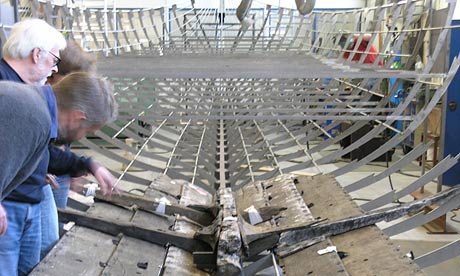
Timbers of Roskilde 6 Viking warship being fitted into the steel frame for display in Copenhagen and at the British Museum.
When the sleek, beautiful silhouette of Roskilde 6 appeared on the horizon, 1,000 years ago, it was very bad news. The ship was part of a fleet carrying an army of hungry, thirsty warriors, muscles toned by rowing and sailing across the North Sea; a war machine like nothing else in 11th-century Europe, its arrival meant disaster was imminent.
Now the ship's timbers are slowly drying out in giant steel tanks at the Danish national museum's conservation centre at Brede outside Copenhagen, and will soon again head across the North Sea – to be a star attraction at an exhibition in the British Museum.
The largest Viking warship ever found, it was discovered by chance in 1996 at Roskilde. It is estimated that building it would have taken up to 30,000 hours of skilled work, plus the labour of felling trees and hauling materials. At just over 36 metres, it was four metres longer than Henry VIII's flagship Mary Rose built 500 years later, and six metres longer than the Viking ship spectacularly recreated as Sea Stallion, which sailed from Scandinavia around Scotland to Dublin in 2007.
"This ship was a troop carrier," said Gareth Williams of the British Museum. It was built some time after 1025 when the oak trees were felled, and held 100 warriors taking turns on 39 pairs of oars if there was not enough wind to fill the square woollen sail. They would have been packed in tightly, sleeping as they could between the seats, with little room for supplies except a minimal amount of fresh water – or ale or mead, which would not have gone stale as fast – and dried salt mutton.
It would have been an uncomfortable journey, but short: they did not need to carry much as their ship could move startlingly fast – Sea Stallion managed an average speed of 5.5 knots, and a top speed of 20 knots. Once they landed, the warriors could forage with ruthless efficiency, as many a coastal community or wealthy monastery discovered.
The ship would probably not have come alone. "There are records in the annals of fleets of hundreds of ships," Williams said. "So you could be talking about an army of up to 10,000 men suddenly landing on your coast, highly trained, fit, capable of moving very fast on water or land." Such luxury ships were fabulously expensive to build and a devastating display of power, Williams said.
The dates suggest Roskilde 6 may have been built for King Canute, who according to legend set his throne in the path of the incoming tide, to prove to his courtiers that even a monarch could not control the force of nature. At the time the Vikings were consolidating their power from temporary raiders to permanent invaders.
With all the original timbers fitted into a steel frame that will recreate its full length and form, the ship will be the centrepiece of Viking, an exhibition opening at the Danish national museum in June, before being transported to London to launch the British Museum's new exhibition space in 2014. It will travel in two containers, by freighter and lorry.

Accident

The vessel was found by accident when an extension was being built to the Roskilde ship museum in Denmark, itself built to hold an earlier find of Viking ships that had been deliberately sunk to narrow the fjord and protect the approach to the town, the old royal capital of Denmark.
In 1996 archaeologists watching the construction work discovered huge timbers turned up in the new foundations, some already chopped in half by the piling. It proved to be a treasure trove of nine ships, of which Roskilde 6, almost half of which was recovered, was the most spectacular.
The timbers stayed in storage while the museum worked out what to do with the unexpected addition to its collection, until the exhibition provided the opportunity for full conservation.
The original Roskilde ships are spectacularly displayed in a purpose-built ship hall, but could never travel: the timbers look solid but might shatter like glass. When excavated, the sodden timbers of Roskilde 6 would have disintegrated into a heap of dust if left exposed to air. National museum conservator Kristiane Straetkvern managed the project, which has been drying timbers up to 10 metres long far more slowly than the older techniques, then replacing the lost moisture with synthetic resin, leaving them lighter but stable.
It was a nervous moment for her when some completed timbers were test assembled, each resting in a felt lined individually laser-cut support, in a frame that bolts together like a giant Meccano set, but that dismantles into hundreds of components for travelling.
The exhibition will display finds from across Scandinavia and from deep into the countries they penetrated wherever a river could carry their shallow draft ships – as far inland as Lichfield in England, deep into Russia, to Byzantium in the east, where Vikings fought as mercenaries on both sides, and beyond. Objects from 12 countries, including many recent finds, will demonstrate that Vikings were traders, farmers, fishermen, and superb craft workers in timber, bone and metal.
However the most spectacular single artefact will be the ship, a potent witness that the Vikings were also dreaded raiders.
The Roskilde team are now experts on recreating ancient ships, regularly commissioned to build them. One day they hope to recreate a full-size, ocean-going replica Roskilde 6, and send it across the sea to awe rather than to terrorise the coasts of the British Isles.

Monday, December 31, 2012

The History Blog » Blog Archive » Apocalypse tourists damage Mayan pyramid

The History Blog » Blog Archive » Apocalypse tourists damage Mayan pyramid

Apocalypse tourists damage Mayan pyramid

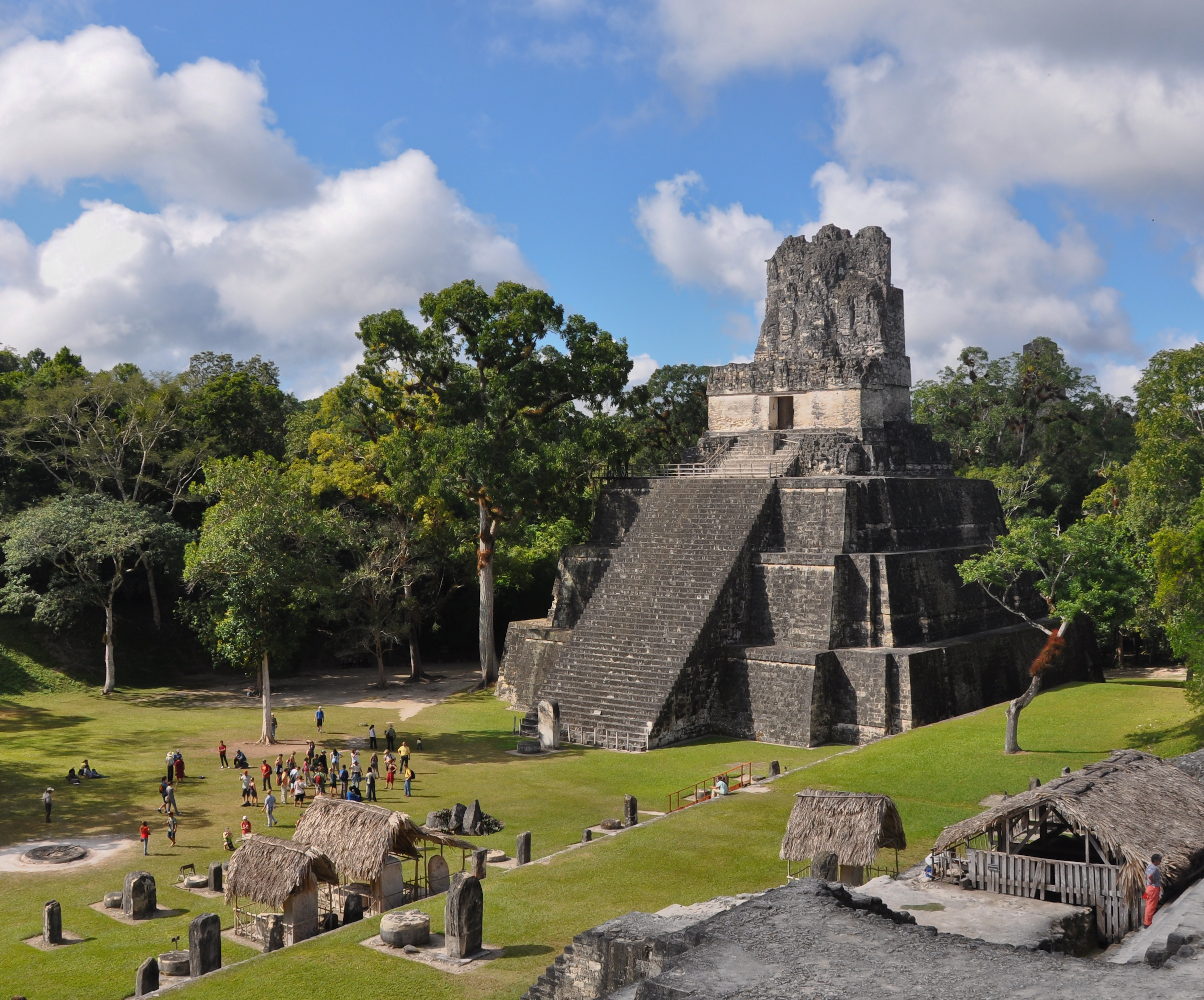
The crowds of tourists who flocked to Tikal in Guatemala to embrace the end of the world as not-really predicted by the Maya on December 21st, 2012, were as careless as they were ignorant. Tikal is the largest extant Mayan urban center and a UNESCO World Heritage site. The temples are too fragile to support climbers so they’re for looking only. I suppose when you’re expecting the world to end just because the 13th Bak’tun cycle of the Mayan Long Count calendar is coming to a close, you can’t be bothered to give a crap about preserving irreplaceable archaeological remains.
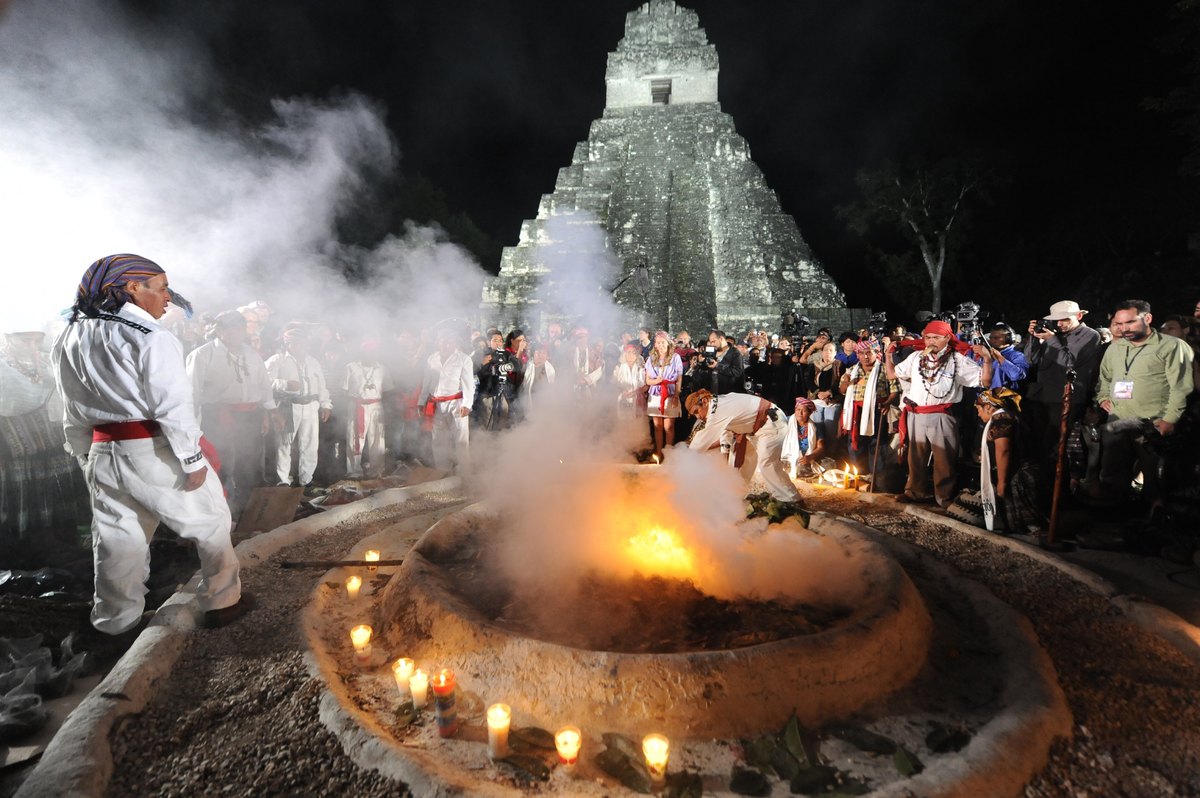
Ethnic Mayan priests held ceremonies celebrating the end of the cycle and the dawn of a new era at archaeological sites all over Central America. Tikal’s ceremony was attended by 7,000 tourists some of whom thought it would be a nifty idea to climb the stairs of Temple II, also known as the Temple of the Masks. According to Osvaldo Gomez, a technical adviser at Tikal, tourists attending the ceremony climbed Temple II causing irreparable damage. He did not provide specifics on the nature of the damage.
Tikal Temple II was built in honor of his wife Lady Kalajuun Une’ Mo’ by King Jasaw Chan K’awiil I who ruled Tikal and environs from 682 to 734 A.D. in the Late Classic period of Maya civilization. Jasaw Chan K’awiil I was a powerful king who revived the flagging fortunes of Tikal and conquered its main rival polity of Calakmul which you might recall as the hometown of the Lady Snake Lord. In 695, Jasaw Chan K’awiil I Calakmul so soundly that it never built another victory monument. He captured King Yuhknoom Yich’aak K’ahk’, who had been on the throne less than ten years since the demise of King Yuhknoom Ch’een the Great, Lady Snake Lord’s father.


Saturday, December 29, 2012

Return to Tarawa | Watch the Documentary Film Free Online | SnagFilms

Return to Tarawa | Watch the Documentary Film Free Online | SnagFilms
http://www.snagfilms.com/films/title/return_to_tarawa

Cold Steel Wardens: Roleplaying in the Iron Age of Comics by A.P. Klosky — Kickstarter

Cold Steel Wardens: Roleplaying in the Iron Age of Comics by A.P. Klosky — Kickstarter

Andy Klosky kickstarter is in it final days and rapidly approaching his funding goal. Check it out for he is one of the up and coming game designers. Reminds me of a young Lester Smith..

22 Ways to Create Compelling Content When You Don’t Have a Clue [Infographic] | Copyblogger

22 Ways to Create Compelling Content When You Don’t Have a Clue [Infographic] | Copyblogger

22 Ways to Create Compelling Content
When You Don’t Have a Clue [Infographic]

image of copyblogger infographic thumbnail
Yep, we’re introducing the first-ever Copyblogger infographic. It’s about our favorite topic — creating great content.
And, as has been our style since the beginning, we’re practicing what we preach. This infographic demonstrates how to repurpose existing content in a different media format, get more bang from your archives, and reach new and different audiences in the process.
The graphic is based on 21 Ways to Create Compelling Content When You Don’t Have a Clue by Copyblogger guest writer Danny Iny. We’ve re-imagined the way to present these content-creation tips, while adding a meta-fabulous #22 (you’ll see why).
Special thanks to our friends on the BlueGlass infographic team for making this thing look so good!
infographic of 22 Ways to Create Compelling Content When You Don't Have a Clue

Stained Glass d20 by aartifacts on Etsy

Stained Glass d20 by aartifacts on Etsy
Stained Glass d20

Buried Christian Empire in Yemen Casts New Light on Early Islam - SPIEGEL ONLINE

Buried Christian Empire in Yemen Casts New Light on Early Islam - SPIEGEL ONLINE

Fortress in the Sky Buried Christian Empire Casts New Light on Early Islam
The "crowned man" relief found in Zafar, Yemen is seen as evidence that there was a Christian empire in the region before Islam took hold.Zoom
Paul Yule
The "crowned man" relief found in Zafar, Yemen is seen as evidence that there was a Christian empire in the region before Islam took hold.
Archeologists are studying the ruins of a buried Christian empire in the highlands of Yemen. The sites have sparked a number of questions about the early history of Islam. Was there once a church in Mecca?
For reasons of data protection and privacy, your IP address will only be stored if you are a registered user of Facebook and you are currently logged in to the service. For more detailed information, please click on the "i" symbol.
Info
Click map to enlarge.
DER SPIEGEL
Click map to enlarge.
The commandment "Make yourself no graven image" has long been strictly followed in the Arab world. There are very few statues of the caliphs and ancient kings of the region. The pagan gods in the desert were usually worshipped in an "aniconic" way, that is, as beings without form.
ANZEIGE
Muhammad had a beard, but there are no portraits of him.
But now a narcissistic work of human self-portrayal has turned up in Yemen. It is a figure, chiseled in stone, which apparently stems from the era of the Prophet.
Paul Yule, an archeologist from the southwestern German city of Heidelberg, has studied the relief, which is 1.70 meters (5'7") tall, in Zafar, some 930 kilometers (581 miles) south of Mecca. It depicts a man with chains of jewelry, curls and spherical eyes. Yule dates the image to the time around 530 AD.
The German archeologist excavated sites in the rocky highlands of Yemen, an occupation that turned quite dangerous recently because of political circumstances in the country. On his last mission, Yule lost 8 kilograms (18 lbs.) and his equipment was confiscated.
Nevertheless, he is pleased, because he was able to bring notes, bits of debris and bones back to Heidelberg. Yule has concluded that Zafar was the center of an Arab tribal confederation, a realm that was two million square kilometers (about 772,000 square miles) large and exerted its influence all the way to Mecca.
Even more astonishing is his conclusion that kings who invoked the Bible lived in the highland settlement. The "crowned man" depicted on the relief was also a Christian.
Conquerers from Ancient Ethiopia
Yule has analyzed the mysterious, robed figure in a report for the academic journal Antiquity. He is barefoot, which is typical of Coptic saints. He is holding a bundle of twigs, a symbol of peace, in his left hand. There is a crossbar on his staff, giving it the appearance of a cross. In addition, he is wearing a crown on his head like the ones worn by the Christian rulers of ancient Ethiopia.
All of this suggests that the man with a strange, round face is a descendant of the conquerors from Africa who succeeded in making one of the boldest landing operations in ancient times.
In 525 AD, the Negus, or king, of Aksum dispatched a fleet across the Red Sea. Soldiers and fighting elephants were ferried across the water to the East on un-tarred, raft-like ships to spread the gospel. In the ensuing decades, his army captured large parts of Arabia.
The first spearhead was targeted at the capital Zafar. Like a fortress in the sky, the town was perched on an extinct volcano, at an altitude of 2,800 meters (9,184 feet) above sea level. Its walls, riddled with towers and alarm bells, were four-and-a-half kilometers long. About 25,000 people lived in Zafar.
According to Yule, between the 3rd and the 5th century the confederation managed to complete a "meteoric rise" and become a superpower. Its merchants traded in sandalwood from Ceylon and valerian from Persia. The state controlled the port of Aden, where the ships of spice traders from India docked. Frankincense, which was made in Arabia, was also traded. It was a place of luxury. Yule found wine amphorae, the remains of precious fish condiments and palaces decorated with sphinxes and lions.
A Peaceful Multi-Cultural Community
The social structure in Zafar also appeared to be unique. The city had a large Jewish community, as evidenced by a seal with a Torah niche. Hebrew inscriptions were discovered. Zafar's residents also included Christians, who built a church there in 354 AD. Arabs who worshipped old idols lived in the alleys.
But this peaceful, multicultural community soon came to an end, as tensions began to mount in the 5th century, and Arabia was transformed into a front.
The Byzantine Empire, bristling with weapons, operated in the west, and its vassals kept making inroads toward the desert. They were accompanied by Christian missionaries, who brought the doctrine of the Holy Trinity to the shepherds on the edge of the Rub' al Khali, the sand desert that makes up much of the southern third of the Arabian Peninsula.
These Sacred Heart imperialists confronted the Persian realm of the Sassanids, with its archers and armies of bearded soldiers clad in heavy metal armor. The Jews, who lived by the tens of thousands in the oases, were to some extent aligned with this power.
It was a confrontation between east and west, and everyone was forced to choose a side.
This also applied to Zafar. To stop the advance of Christianity, individual Arab kings initially converted to Judaism. The entire ruling class of the realm eventually followed suit. From then on, people were given names like Yehuda and Yussuf.
Then they took up arms. In approximately 520 AD, they attacked the Christian colony of Najran, where there were churches and monasteries. Countless Christians were slaughtered. The shocking news traveled all the way to Europe.
A 'Puppet King'
Now the spiral of violence began turning more rapidly. The furious Byzantines and their allies from Africa were out for revenge. Kaleb, the Aksumite king of Ethiopia (who wore gold jewelry in his hair and had himself driven around in an elephant carriage) went on the counter-offensive.
If the sources are correct, his first naval maneuver was a miserable failure. In 525 AD, with the help of additional warships provided by the Byzantines, he successfully completed the crossing to the other side of the Red Sea.
The relief of the "crowned man" from Zafar was apparently created during this period of invasion. Yule interprets it as a representation of the Christian "puppet king" of the Ethiopians.
The invaders continued their attacks. Southern Arabia's holy warrior, Abraha, had taken control of large areas before long. He even attempted to free bishops being held prisoner by the Persian enemy in Nisibis (in modern-day Turkey), some 2,500 kilometers away.
The man embarked on a religious crusade at the same time. He rebuilt the churches that had been destroyed in Najran, and he had new ones built in Marib and Aden.
His most beautiful church was in Sanaa. It had gilded doors and a throne made of ebony and ivory. In the morning, the rays of the sun shone through an alabaster panel in the dome. The Byzantines supported the project, sending craftsmen, marble and mosaics.
The result was an architectural miracle, the likes of which all of Arabia had never seen before.
Year of the Elephant
After the triumph of Islam in the 7th century, the church was torn down and stripped of its treasures, and a mosque was built on the site. As Barbara Finster, an archeologist from the Bavarian city of Bamberg, discovered, some of the columns in the mosque came from the wrecked church, while some of the church's magnificent mosaics were sent to Mecca, essentially as booty.
The enmity between Sanaa and Mecca apparently smoldered from the start. Medieval Koran scholars report that Abraha built his magnificent church to lure the pilgrims away from the Kaaba, Islam's most sacred site.
Another Islamic source describes how the dispute eventually escalated: An angry native of Mecca relieved himself in the Sanaa church, prompting the furious Abraha to dispatch his warriors, mounted on elephants, to destroy the Kaaba. In the interpretation of Sura 105 of the Koran, the only reason he was unsuccessful was that Allah had armed a flock of birds with clay balls that rained down on the Christian army like bullets.
Are these nothing but religious myths? There is historical evidence, in the form of a rock inscription, that Abraha conducted large-scale raids against defiant Arab tribes near Mecca in 552 AD. A few Western historians consider this to be the true year of Muhammad's birth. The scholar Ibn Ishak, who wrote the first biography of the Prophet, states that the proclaimer of the Koran was born "in the year of the elephant."
Oddly enough, the scrawled rock inscription could be interpreted to mean that the tribe of the Kuraish, to which the Prophet belonged, sometimes fought for the Christians. Were they allies? Was Muhammad born in a city that stood under the banner of the cross?
Hard Times
There are indications that this could be true. For instance, a Christian cemetery is mentioned in the oldest history of Mecca, written by the Arab historian Asraki.
What a mess. In ancient Arabia, the three Abrahamic world religions intersected in confusing ways. But the Koran prevailed in the end.
But many things are still unclear. Our perspective is complicated by the fact that the birth of Islam occurred at a time of severe hardship. Climate data obtained from limestone caves in Oman prove that there was a terrible drought in the southern part of the Arabian Peninsula in the middle of the 6th century. There was also a plague epidemic that began in 541 and afflicted the entire Orient. Other, smaller epidemics followed, causing thousands upon thousands of deaths.
It was these horrors that probably triggered the demise of Zafar. Yule suspects that the drought devastated the "fragile ecology of the highlands." Cattle died of thirst and barns remained empty.
Are the archeologist's suspicions correct? Even Muhammad, as a young child, was threatened by disease and hunger. According to Ibn Ishak, his wet nurse was deeply concerned when she was told to bring the little boy back to his native city.
The reason, he writes, was the "plague in Mecca."
Translated from the German by Christopher Sultan

Athenaeum of Hadrian dig completed

The History Blog » Blog Archive » Athenaeum of Hadrian dig completed

Athenaeum of Hadrian dig completed

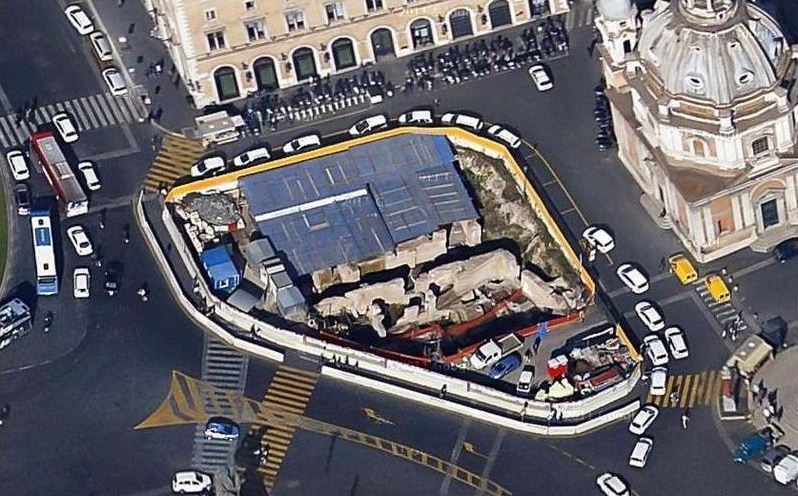
Three years ago archaeologists surveying Piazza Venezia in the center of Rome for a much-needed third subway line found the remains of an athenaeum built by the emperor Hadrian in the second century A.D. The brick manufacturers’ stamps confirmed that the arts center was built in 123 A.D., 12 years earlier than first suggested based on ancient documentary sources.
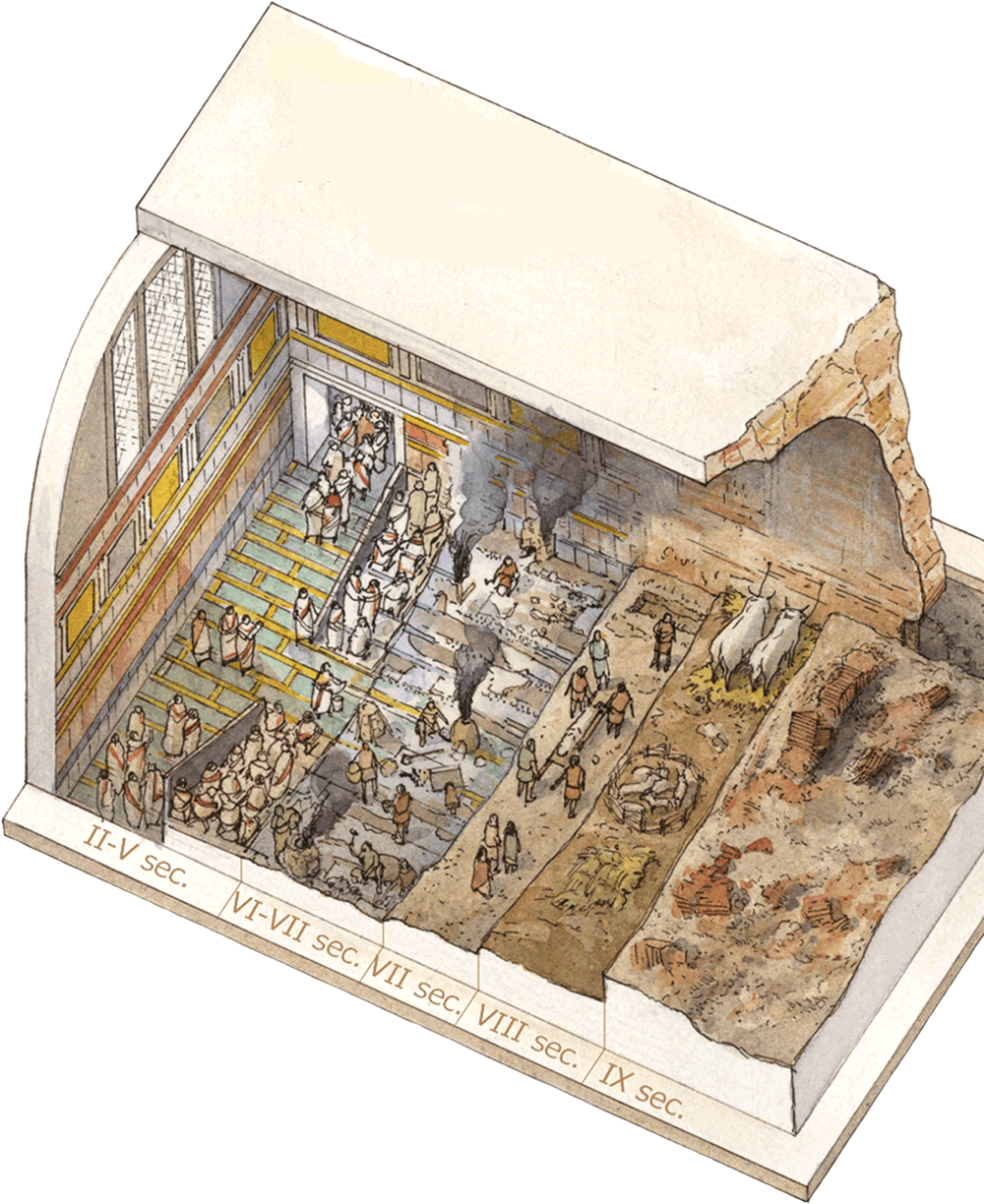
It had three rectangular rooms in which poets, philosophers, authors and rhetoricians recited their work and taught lessons to audiences of up to 900 people. Characteristic of Hadrian’s particular interests in architecture, it had an unusual arched roof. Hadrian loved him some domed roofs. According to Cassius Dio (Roman History, Book 69, Chapter 4), Hadrian had Trajan’s favorite architect Apollodorus of Damascus exiled and executed because he had once insulted Hadrian’s penchant for domes.
Once when Trajan was consulting him on some point about the buildings he had said to Hadrian, who had interrupted with some remark: “Be off, and draw your gourds. You don’t understand any of these matters.”
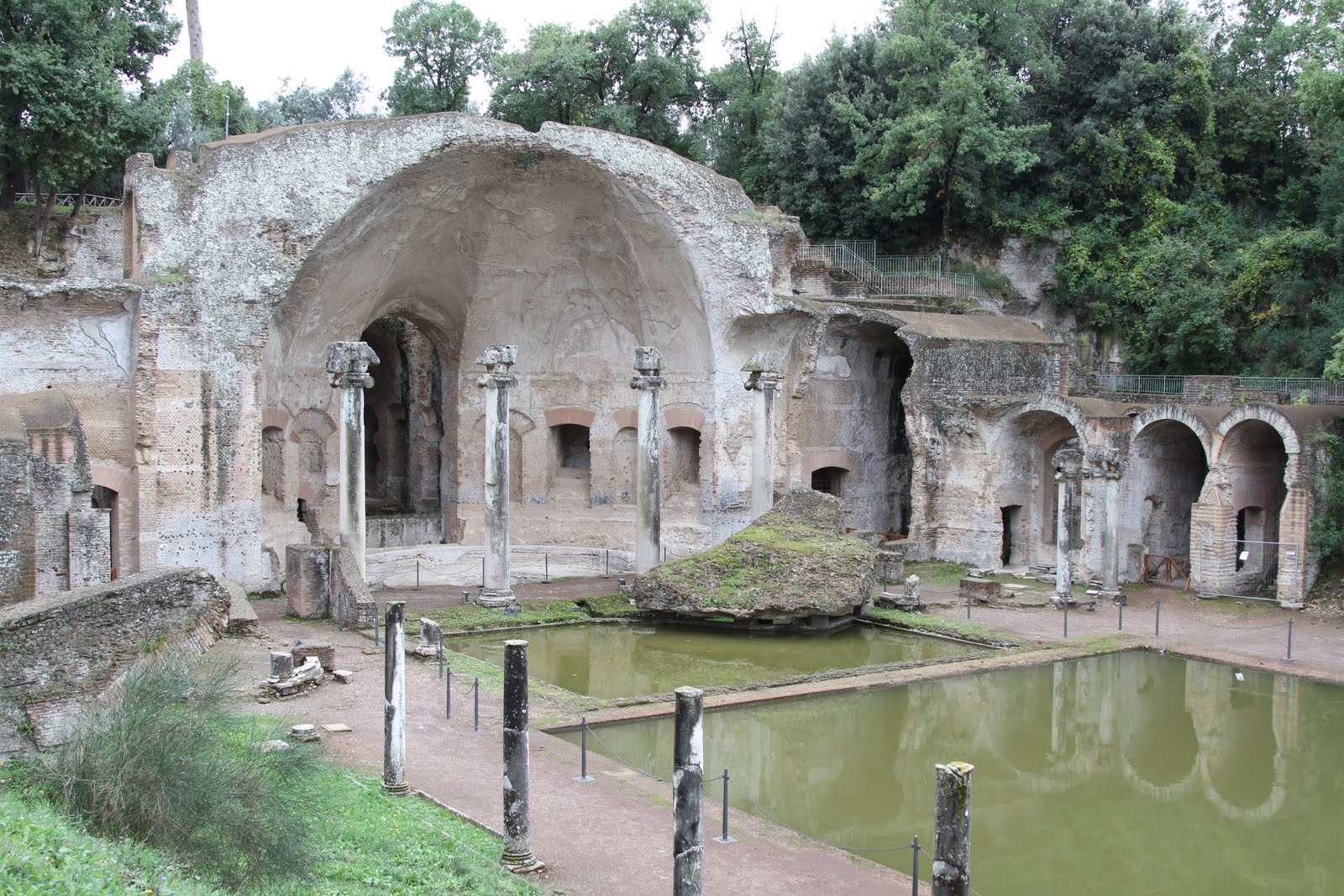
The gourd in question was apparently the dome of the Serapeum at Hadrian’s Villa in Tivoli which Hadrian was in the process of designing at the time.
Apollodorus’ disdain notwithstanding, Hadrian combined his love of architecture with his love of art and Hellenophilic tendencies to create the athenaeum which he had built right next to the Apollodorus-designed Forum of Trajan. Hadrian also wrote poetry in both Latin and Greek, so the auditorium was a perfect storm of the emperor’s interests.
Archaeological evidence indicates the space was used as an auditorium through the 5th century A.D., long after Hadrian’s death and well into the Christian period. Its marble began to be quarried around the sixth century. At the same time, metal ingots and the remains of furnaces found from the 6th and 7th centuries suggest it may have been used a mint in the Byzantine era for the production of bronze coins. It was also apparently used as a necropolis in the late 7th century, and following the trend of an increasingly depopulated, ruralized Rome, as a livestock barn in the 8th.
In the 9th century the roof collapsed during an earthquake in 848 A.D. After that, new structures were built on top of it, including a hospital in the 16th century. A microcosm of millennia of Roman life, t’s a major find, the most important in 70 years, some archaeologists believe.
So now that the excavation is complete, what about the Metro line? The problem isn’t the subway tunnel itself which will be 80 feet underground to avoid the layers and layers of Roman history. It’s the subway stop, which of course has to come up to modern ground level, causing all the headaches. The final decision has yet to be made, but transit authorities are hoping to work with archaeologists to build the exit along an ancient sewer line. The remains of the athenaeum will be right next to the stop, protected but still visible by tourists and riders.

Friday, December 28, 2012

Dresden Codex | Atlas Obscura

Dresden Codex | Atlas Obscura

Dresden Codex

To the great disappointment of doomsdayers, this codex merely contains records of the Moon and Venus

0
Contributors:Tre
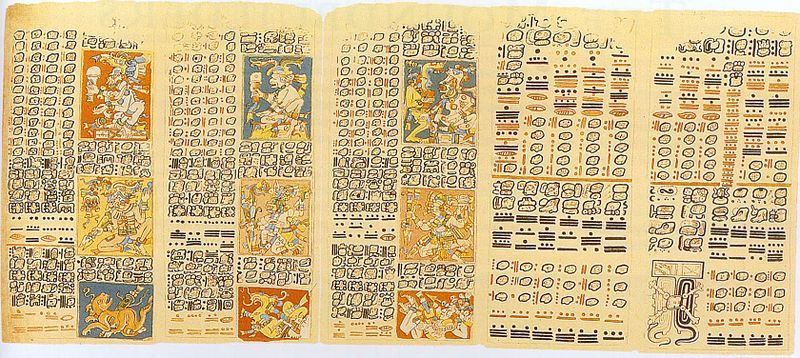
The Dresden Codex was named in the tradition of all other codices: not for its point of origin, but for its final resting place. It lives in the Saxon State Library in Dresden, Germany, under glass and above mirrors, allowing for the viewing of both sides of the text.
It's the most complete of the three authenticated codices, and dates to pre-Columbian Mexico, 11th or 12th century Chichen Itza in the Yucatan, and is thought to be a copy of a much older work from two or three hundred years before. Though doomsday enthusiasts would love to believe it holds the secrets of the coming apocalypse, in reality it merely paints of picture of meticulous early astronomers, holding the astronomical charts of the Moon and Venus, including precise calculations of lunar eclipse. These charts would have served as an almanac and calendar for ritual celebrations.
It is speculated that this codex was taken from Chichen Itza by Hernando Cortes in 1519 and presented as a gift to King Charles I of Spain, who financed Cortes’ expeditions and appointed him governor of the Mexican territories. The over 200-year gap between this theorized trip across the ocean and 1739, when the codex was purchased from a private collection in Vienna by Johann Christian Götze, the director of Royal Library of Dresden (now the Saxon State Library), is completely undocumented.
After coming to live in Dresden, it stayed out of the public eye for another one hundred years before being displayed between two plates of glass. During the WWII firebombing of Dresden in 1945, the codex was badly water damaged, and after careful restoration put back under glass in the wrong order. This mistake was never fixed because parts of the Amatl paper (flattened fig bark) and pigment adhered to the glass, assuring its destruction if disturbed again.