 Why would a flourishing civilization, advanced for its time, suddenly cease to exist, its inhabitants were gone and its architecture abandoned? Conspiracy theorists offer all manner of offbeat explanations including alien abduction, but in the case of these 12 societies, the causes were likely more mundane: natural disasters, climate change, invasions and economic irrelevance. Still, we don’t know – and likely never will – exactly what happened to bring about the end of the Khmer Empire of Cambodia, the Minoan society of Crete or two ancient civilizations right here in the United States. The Indus Valley Civilization, Pakistan (images via: national geographic)Home to one of the greatest man-made architectural wonders of the ancient world, the Indus Valley Civilization (known at the height of its influence as the Harappan Civilization) was among the largest early urban settlements on any continent. Located in modern-day Pakistan, the Indus Valley Civilization thrived 4,500 years ago and was then forgotten but for local legends until ruins were excavated in the 1920s. Sophisticated and technologically advanced, this civilization, including the famous Mohenjo Daro, featured the world’s first urban sanitation systems as well as evidence of surprising proficiency in mathematics, engineering, and even proto-dentistry. By the year 1500 BCE, the Indus Valley Civilization was virtually abandoned, possibly after the invasion by Indo-European tribes or a collapse in agriculture due to climate change. The Khmer Empire, Cambodia (images via: tourism object, christian haugen, christoph rooms)Once one of the most powerful empires of Southeast Asia, the Khmer civilization spread from modern-day Cambodia out into Laos, Thailand, Vietnam, Myanmar and Malaysia and is best known today for Angkor, its capital city. The empire dates back to 802 CE. Other than stone inscriptions, no written records survive, so our knowledge of the civilization is pieced together from archaeological investigations, reliefs in temple walls and the reports of outsiders including the Chinese. The Khmers practiced both Hinduism and Buddhism and built intricate temples, towers and other structures including Angkor Wat, dedicated to the god Vishnu. Attacks from outsiders, deaths from the plague, water management issues affecting the rice crops and conflicts over power among the royal families likely led to the end of this empire, which finally fell to the Thai people in 1431 CE. The Anasazi, New Mexico, United States (images via: erik anestad, national geographic, puroticorico)‘Anasazi’ is the modern name for the ancient Pueblo Peoples who inhabited the ‘Four Corners’ area of the southwestern United States at the junction of the states of Utah, Arizona, New Mexico and Colorado. Their civilization emerged around the 12th century BCE and remains best known for stone and adobe structures built along cliff walls including Cliff Palace in Mesa Verde National Park, the White House Ruins and Pueblo Bonito at the northern rim of Chaco Canyon. This architecture evolved into amazing multi-story dwellings that were often only accessible by rope or ladder. The ancient Puebloans did not necessarily “vanish”; they did, however, abandon their homeland for reasons unknown in the 12th and 13th centuries CE. Many experts as well as modern Puebloans, who claim the ancient Puebloans as their ancestors, believe that deforestation and droughts caused internal conflict and warfare, causing these ancient people to disseminate. The Olmec Civilization, Mexico (images via: Wikimedia commons, bernt rostad)In what is now Veracruz and Tabasco in the tropical lowlands of south-central Mexico was once a grand Pre-Columbian civilization that constructed incredibly ‘colossal heads’, practiced bloodletting and human sacrifice, invented the concept of the number zero and essentially laid the foundation for every Mesoamerican culture that was to follow. The Olmec civilization might even have been the first civilization in the Western hemisphere to develop a writing system, and possibly invented the compass and the Mesoamerican calendar. Dating to around 1500 BCE, the Olmec civilization wasn’t ‘discovered’ by historians until the mid-19th century. Its decline is blamed on environmental changes caused by volcanic eruptions, earthquakes or possibly damaging agricultural practices. The Aksumite Empire, Ethiopia (images via: Wikimedia commons)A major participant in a trade with the Roman Empire and Ancient India, the Aksumite Empire – also known as the Kingdom of Aksum or Axum – ruled over northeastern Africa including Ethiopia starting in the 4th century BCE. Theorized to be the home of the Queen of Sheba, the Aksumite Empire was likely an indigenous African development that grew to encompass most of present-day Eritrea, northern Ethiopia, Yemen, southern Saudi Arabia and northern Sudan. The empire had its own alphabet and erected enormous obelisks including the Obelisk of Axum, which still stands. It was the first major empire to convert to Christianity. Axum’s decline has been variously blamed on economic isolation due to the expansion of the Islamic Empire, invasions, or climate change which altered the flood pattern of the Nile. The Minoans, Crete (images via: Wikimedia commons)Named after the mythical king Minos, the Minoan civilization of Crete wasn’t rediscovered until early in the 20th century, but since then we have uncovered fascinating puzzle pieces of an ancient civilization that began flourishing over 7,000 years ago, hitting its zenith around 1600 BCE. Centers of commerce appeared around 2700 BCE, and as the civilization advanced, palaces of greater and greater complexity were built and rebuilt following series of disasters – likely earthquakes and eruptions of the Thera volcano. One of these palaces was Knossos, the ‘labyrinth’ associated with the legend of Minos, which is now a major archaeological site and tourist attraction. But sometime around 1450 BCE, there was an unknown disaster that the Minoans apparently weren’t able to recover from, and the civilization met its downfall. In moved the Mycenaeans – who would later join the Minoans in the void of vanished empires. Fun fact: the Minoan script, known as Linear A, remains undeciphered. The Cucuteni-Trypillians, Ukraine & Romania (images via: Wikimedia commons, germanic)The largest settlements in Neolithic Europe were built by the Cucuteni-Trypillians of modern-day Ukraine, Romania, and Moldova. This mysterious civilization, which flourished between 5500 BCE and 2750 BCE, is characterized by its uniquely patterned pottery and by its bizarre habit of burning its own villages to the ground every 60 to 80 years. The villages were rebuilt again and again, on top of the ashes of the old ones. About 3,000 Cucuteni-Trypillian archaeological sites have been identified including what may be the world’s oldest saltworks. Like so many other civilizations, the Cucuteni-Trypillians may have been wiped out by climate change, but other theories suggest that they gradually blended with other groups until their own culture was lost. The Nabateans, Jordan (images via: Wikimedia commons)The ancient Nabatean civilization occupied southern Jordan, Canaan, and northern Arabia starting in the sixth century BCE, when the Aramaic-speaking Nabatean nomads began gradually migrating from Arabia. Their legacy is epitomized by the breathtaking city of Petra, carved into the solid sandstone rock of Jordan’s mountains, and they are remembered for their skill in water engineering, managing a complex system of dams, canals, and reservoirs which helped them expand and thrive in an arid desert region. Little is known of their culture and no written literature survives. They were overtaken by the Romans in 65 BCE, who took full control by 106 CE, renaming the kingdom Arabia Petrea. Sometime around the 4th century CE, the Nabateans left Petra for unknown reasons. It’s believed that, after centuries of foreign rule, the Nabatean civilization was reduced to disparate groups of Greek-writing peasants who were eventually converted to Christianity before their lands were seized altogether by Arab invaders. Cahokia, Illinois, United States (images via: Wikimedia commons)Few Americans realize that we have the remains of a lost ancient civilization right here in the United States – in Illinois, just across the Mississippi River from St. Louis, Missouri. The Cahokia Mounds Historic Site is all that is left of an indigenous civilization of the Mississippian culture, settled around 600 CE. The inhabitants of Cahokia did not seem to keep written records, but preserved at this World Heritage Site are a series of grass-covered man-made ‘mounds’ as well as pottery and other artifacts. Cahokia was once the largest urban center north of the great Mesoamerican cities of Mexico and may have once been home to as many as 40,000 people – greater, in the year 1250 CE, than the population of London, England, or that of any American city that was to come until Philadelphia around the year 1800. Cahokia was abandoned around 100 years before Europeans arrived in North America, possibly due to environmental factors or invasion of outside peoples. The Mycenaean Civilization, Greece (images via: clarity, wikimedia commons)Unlike the Minoans before them, the Mycenae didn’t flourish by trade alone – they set out to conquer, and expanded into an empire that overtook much of Greece. Hitting its peak right around the time the Minoans disappeared, the Mycenaean civilization enjoyed five centuries of domination before vanishing sometime around 1100 BCE. Hellenic legend holds that the Mycenae defeated the possibly mythological Troy, and the empire’s artifacts have been found as far away as Ireland. In fact, this culturally and economically wealthy civilization has left behind a wealth of art, architecture, and artifacts. What happened to the Mycenae? Natural disasters are possible, but most experts believe that it was either foreign invaders or internal conflict that brought about the end to this once-great empire. Moche Civilization, Peru (images via: national geographic, inkanatura)More of a collection of peoples that shared a similar culture than an empire, the Moche civilization developed an agriculturally-based society complete with palaces, pyramids, and complex irrigation canals on the north coast of Peru between about 100 and 800 CE. While they had no predominant written language, leaving us few clues as to their history, they were an extraordinarily artistic and expressive people who left behind incredibly detailed pottery and monumental architecture. In 2006, a Moche chamber was discovered that was apparently used for human sacrifice, containing the remains of human offerings. There are many theories as to why the Moche disappeared, but the most prevalent explanation is the effect of El Nino, a pattern of extreme weather characterized by alternating periods of flooding and extreme droughts. Perhaps this explains the Moche’s bloody efforts to appease the gods. Clovis Culture, North America (images via: Clovis in the southeast, wikimedia commons)Very little is known about the Clovis culture, a prehistoric Paleo-Indian people that were thought to have been the first human inhabitants of North America. Archaeologists have tentatively dated artifacts found at an archaeological site near Clovis, New Mexico at 11,500 RCYBP (radiocarbon years before present), equal to about 13,500 calendar years, but dating beyond 10,000 years is considered unreliable. The artifacts, bone and stone blades known as Clovis points, are among the only clues we have that this group – technically not a civilization – ever existed. In the last thirty years, remains of possibly older human activity have been discovered, calling the Clovis’ status into question, but whether or not they were first, they did disappear rather abruptly. Some speculate that the Clovis overhunted, compromising their own food supply, or that climate change, disease, and predators took their toll. Others believe that the Clovis didn’t disappear at all, but simply dispersed into the beginnings of early Native American tribes. |

Games, General Geekery, and what knots found on the web
Sunday, July 31, 2016
12 Societies that Vanished in Mystery - WebEcoist

Mega Bloks Destiny Cryptid & Starwinder Hunters, Samsara Warlock review
Mega Bloks Destiny Cryptid & Starwinder Hunters, Samsara Warlock review
LEAGUE OF GODS US Trailer (2016) Jet Li Fantasy Movie
LEAGUE OF GODS US Trailer (2016) Jet Li Fantasy Movie
107 Invader Zim Facts - (ToonedUp #170) | ChannelFrederator
107 Invader Zim Facts - (ToonedUp #170) | ChannelFrederator
Stranger Things - Winona Ryder | official featurette (2016) Netflix
Stranger Things - Winona Ryder | official featurette (2016) Netflix
Wednesday, July 27, 2016

Middle Earth Swords | 8 Bit Nerds
Infographic from 8 Bit Nerd showing swords from Lord of the Rings.

Middle Earth Swords | 8 Bit Nerds
Middle Earth Swords | 8 Bit Nerds
Monday, July 25, 2016

Saturday, July 23, 2016
Sunday, July 17, 2016
Tuesday, July 5, 2016


Thursday, June 30, 2016


Wednesday, June 29, 2016
Tuesday, June 28, 2016


Friday, June 24, 2016


17 Passages From "Lord Of The Rings" Beautifully Recreated In Stained Glass
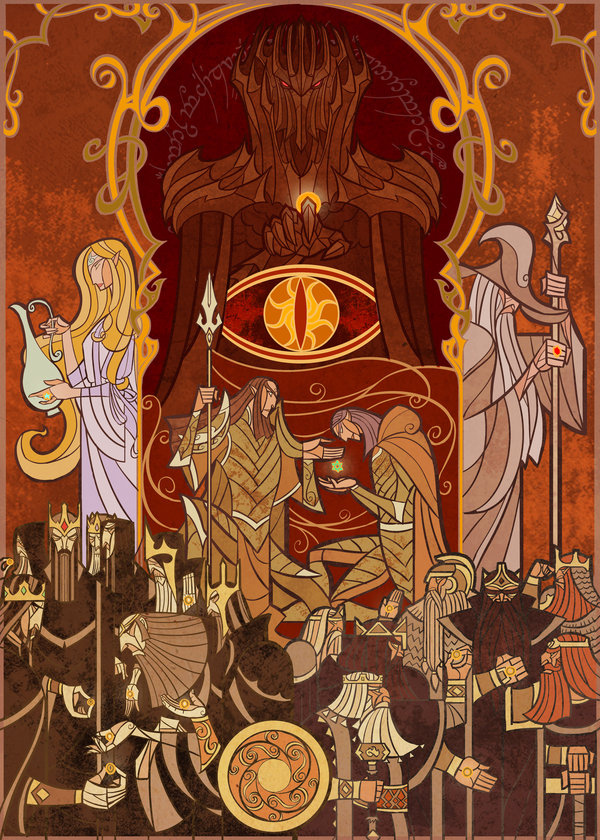
Three Rings for the Elven-kings under the sky,
Seven for the Dwarf-lords in halls of stone,
Nine for Mortal Men, doomed to die,
One for the Dark Lord on his dark throne
In the Land of Mordor where the Shadows lie.One Ring to rule them all, One Ring to find them,
One Ring to bring them all and in the darkness bind them.
In the Land of Mordor where the Shadows lie.
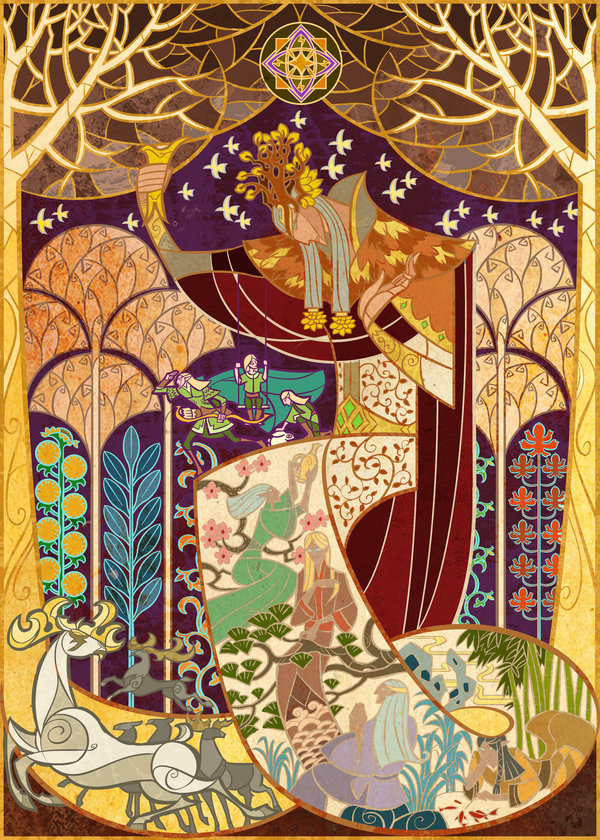
Via “The Hobbit” by http://J.R.R. TolkienIn a great hall with pillars hewn out of the living stone sat the Elvenking on a chair of carven wood. On his head was a crown of berries and red leaves, for the autumn was come again. In the spring he wore a crown of woodland flowers. In his hand he held a carven staff of oak
3. The Shepherd Of The Forest
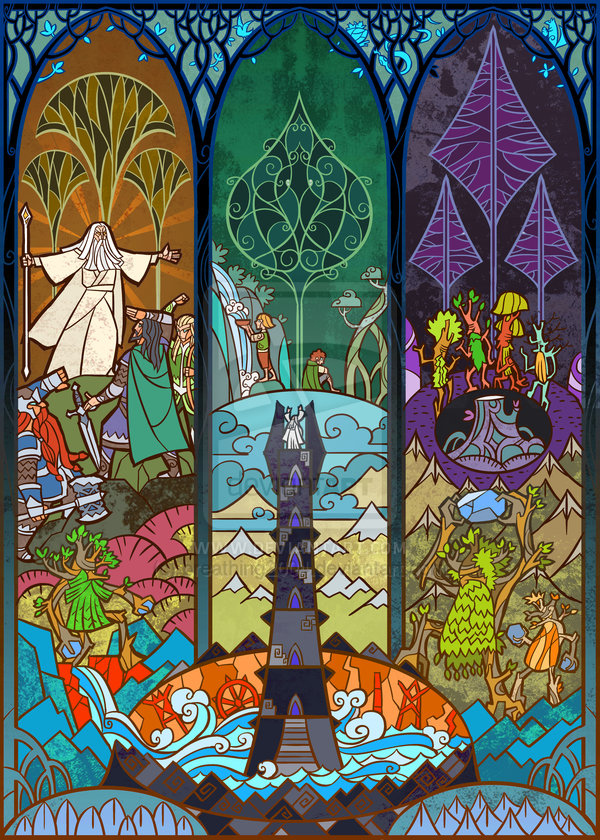
“Of course, it is likely enough, my friends,” he said slowly, “likely enough that we are going to our doom: the last march of the Ents. But if we stayed home and did nothing, doom would find us anyway, sooner or later. That thought has long been growing in our hearts; and that is why we are marching now. It was not a hasty resolve. Now at least the last march of the Ents may be worth a song.”
Via “
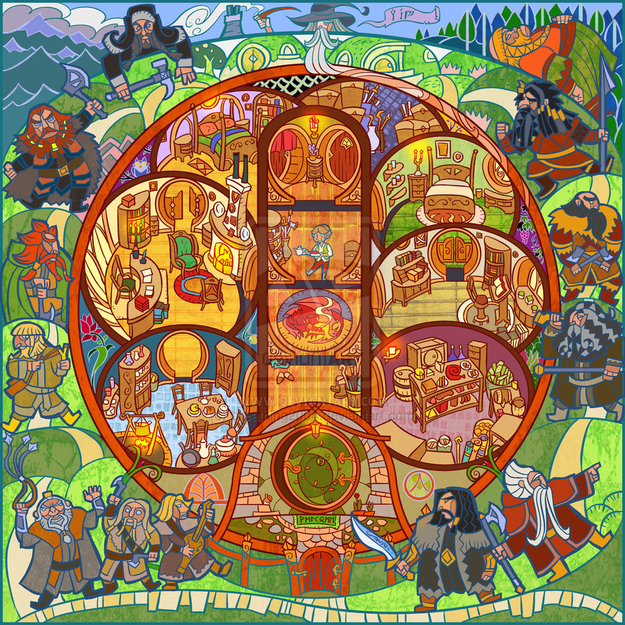
Bilbo Baggins was standing at his door after breakfast smoking an enormous long wooden pipe that reached nearly down to his woolly toes (neatly brushed)—Gandalf came by.
Via “The Hobbit” by http://J.R.R. Tolkien
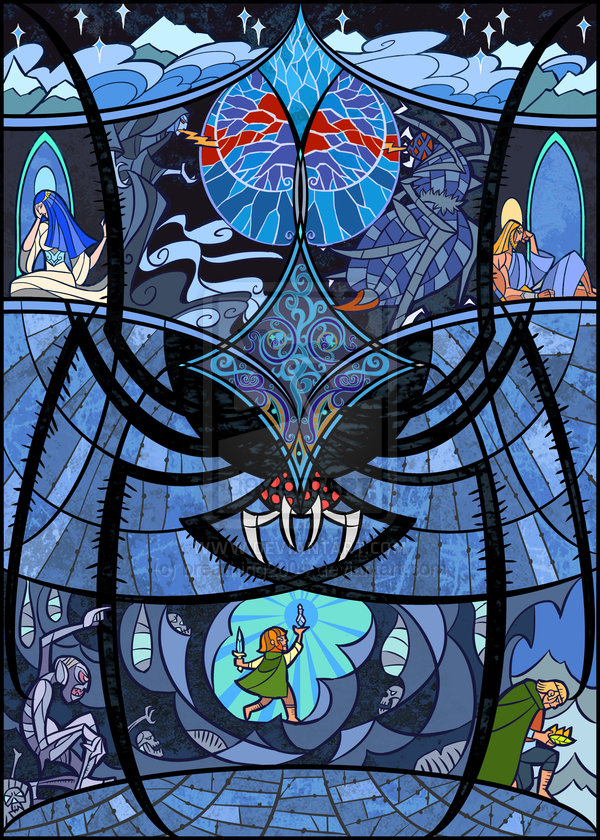
But still she was there, who was there before Sauron, and before the first stone of Barad-dûr; and she served none but herself, drinking the blood of Elves and Men, bloated and grown fat with endless brooding on her feasts, weaving webs of shadow; for all living things were her food, and her vomit darkness.
Via “The Two Towers” by http://J.R.R. Tolkien
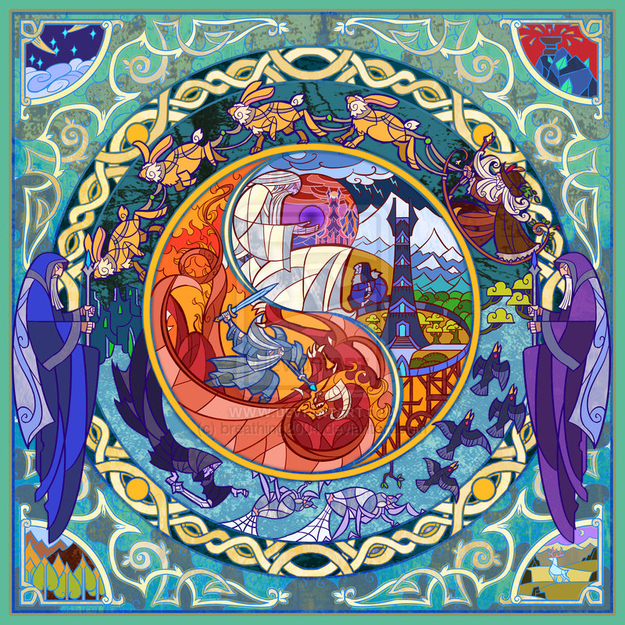
The first to come was one of noble mien and bearing, with raven hair, and a fair voice, and he was clad in white; great skill he had in works of hand, and he was regarded by well-nigh all, even by the Eldar, as the head of the Order. Others there were also: two clad in sea-blue, and one in earthen brown; and the last came one who seemed the least, less tall than the others, and in looks more aged, grey-haired and grey-clad, and leaning on a staff.
Via “The Book Of Unfinished Tales” by http://J.R.R. Tolkien
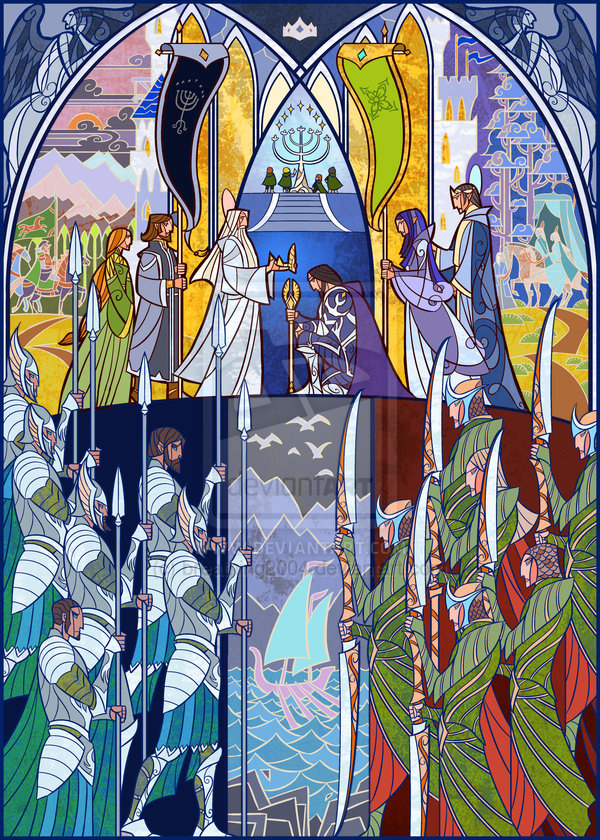
Then Frodo came forward and took the crown from Faramir and bore it to Gandalf; and Aragorn knelt, and Gandalf set the White Crown upon his head and said:
“Now come the days of the King, and may they be blessed while the thrones of the Valar endure!”
Via “The Return Of The King” by http://J.R.R. Tolkien
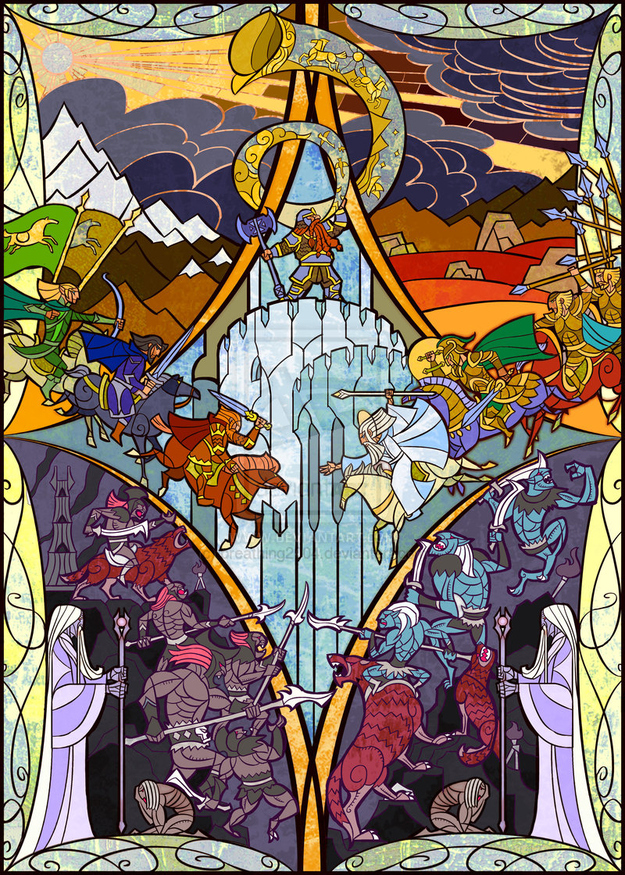
“The day will bring hope for me,” said Aragorn. “Is it not said that no foe has ever taken the Hornburg, if men defended it?”“So the minstrels say,” said Éomer.“Then let us defend it, and hope!”
Via “The Two Towers” by http://J.R.R. Tolkien
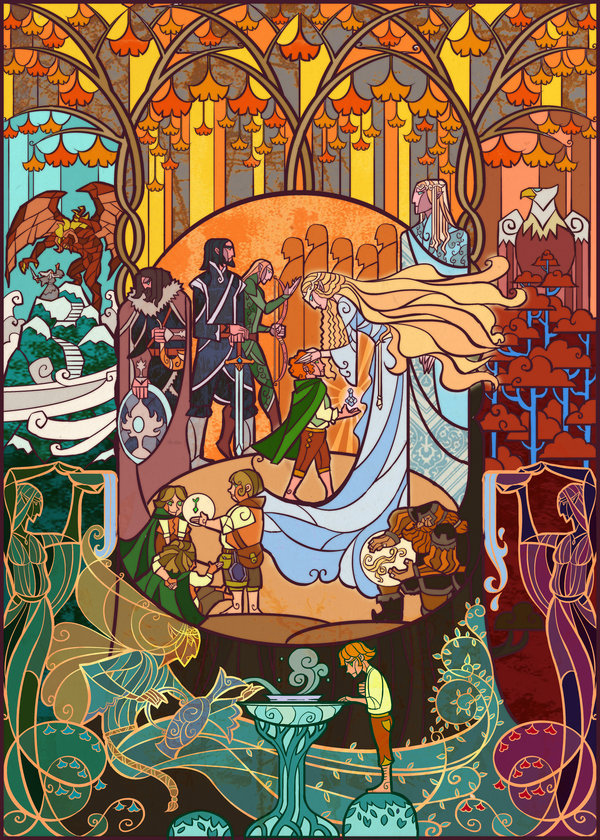
On two chairs beneath the bole of the tree and canopied by a living bough there sat, side by side, Celeborn and Galadriel. Very tall they were, and the Lady no less tall than the Lord; and they were grave and beautiful. They were clad wholly in white; and the hair of the Lady was of deep gold, and the hair of the Lord Celeborn was of silver long and bright; but no sign of age was upon them, unless it were in the depths of their eyes; for these were keen as lances in the starlight, and yet profound, the wells of deep memory.
Via “The Fellowship Of The Ring” by http://J.R.R. Tolkien
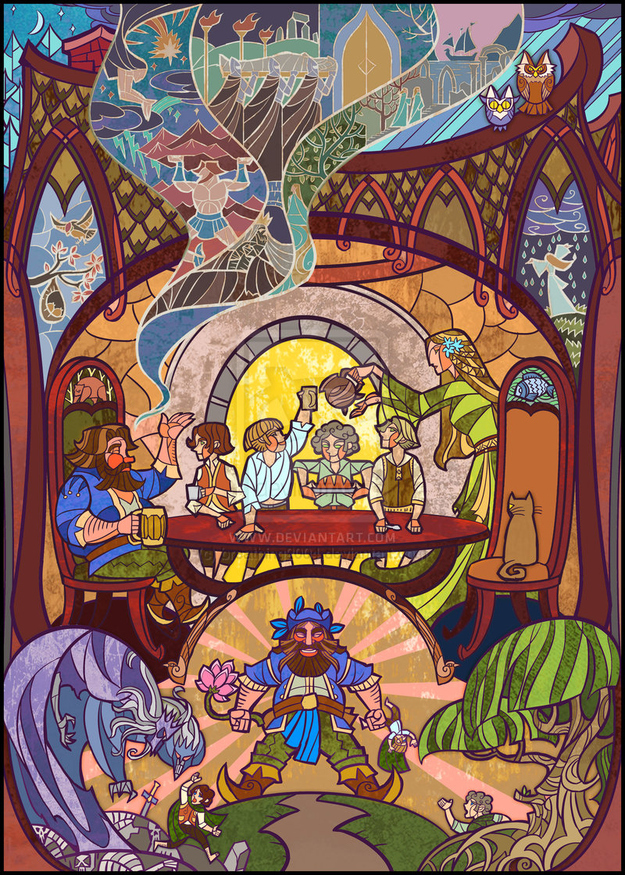
“Fair lady!” said Frodo again after a while. “Tell me, if my asking does not seem foolish, who is Tom Bombadil?”“He is,” said Goldberry, staying her swift movements and smiling. Frodo looked at her questioningly. “He is, as you have seen him,” she said in answer to his look. “He is the Master of wood, water, and hill.”Via “The Fellowship Of The Ring” by http://J.R.R. TolkienThe Two Towers” by http://J.R.R. Tolkien
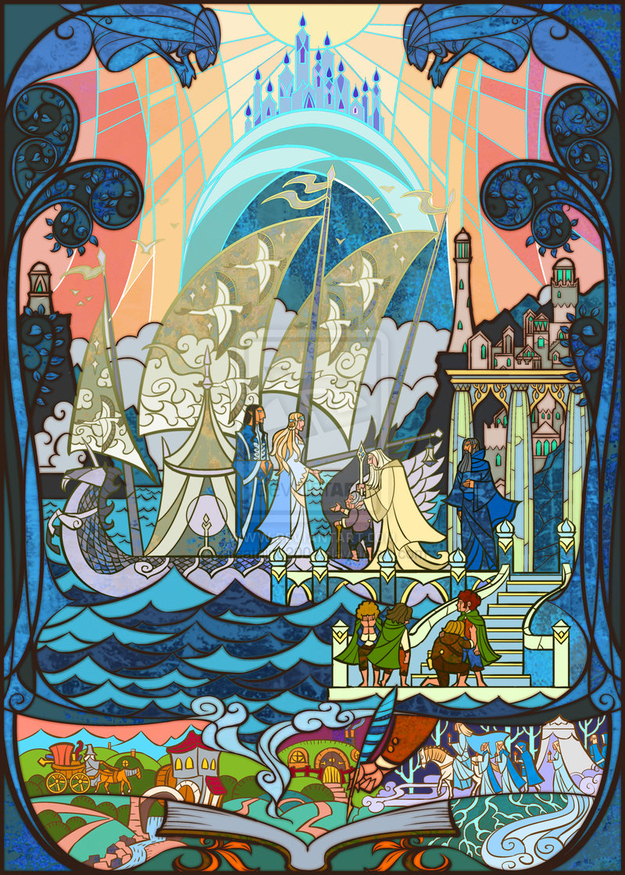
To the sea, to the sea! The white gulls are crying,
The wind is blowing, and the white foam is flying.
West, west away, the round sun is falling,
Grey ship, grey ship, do you hear them calling,
The voices of my people that have gone before me?
I will leave, I will leave the woods that bore me;
For our days are ending and our years failing.
I will pass the wide waters lonely sailing.
Long are the waves on the Last Shore falling,
Sweet are the voices in the Lost Isle calling,
In Eressea, in Elvenhome that no man can discover,
Where the leaves fall not: land of my people forever!
Via “The Return Of The King” by http://J.R.R. Tolkien
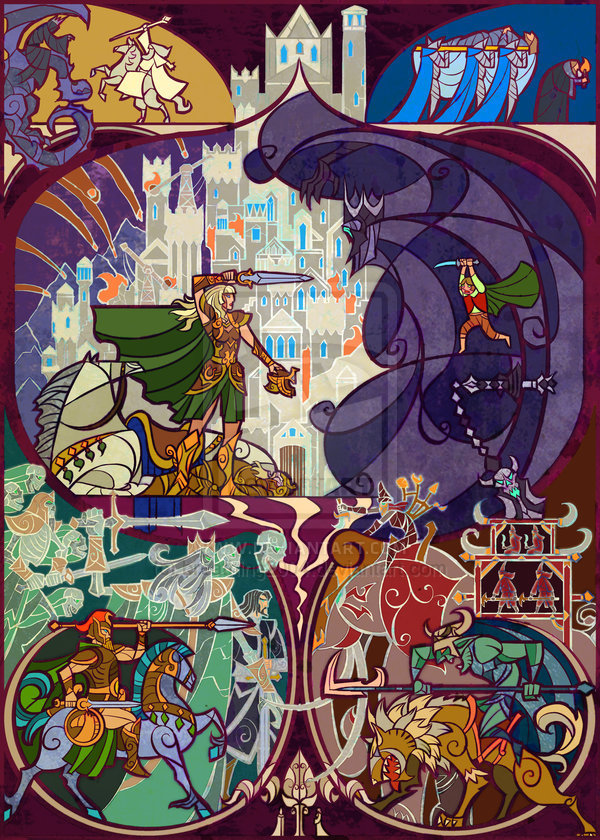
But no living man am I! You look upon a woman. Éowyn I am, Éomund’s daughter. You stand between me and my lord and kin. Begone, if you be not deathless! For living or dark undead, I will smite you, if you touch him.
Via “The Return Of The King” by http://J.R.R. Tolkien
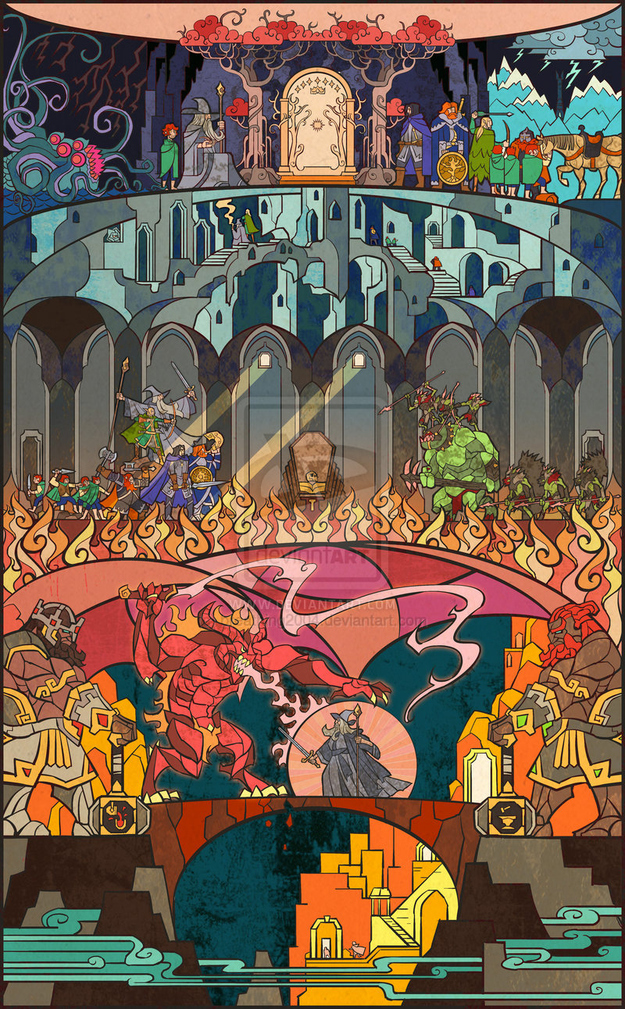
The Balrog reached the bridge. Gandalf stood in the middle of the span, leaning on the staff in his left hand, but in his other hand Glamdring gleamed, cold and white. His enemy halted again, facing him, and the shadow about it reached out like two vast wings. It raised the whip, and the thongs whined and cracked. Fire came from its nostrils. But Gandalf stood firm.“You cannot pass,” he said. The orcs stood still, and a dead silence fell. “I am a servant of the Secret Fire, wielder of the flame of Anor. You cannot pass. The dark fire will not avail you, flame of Udûn. Go back to the Shadow! You cannot pass.”
Via “The Fellowship Of The Ring” by http://J.R.R. Tolkien
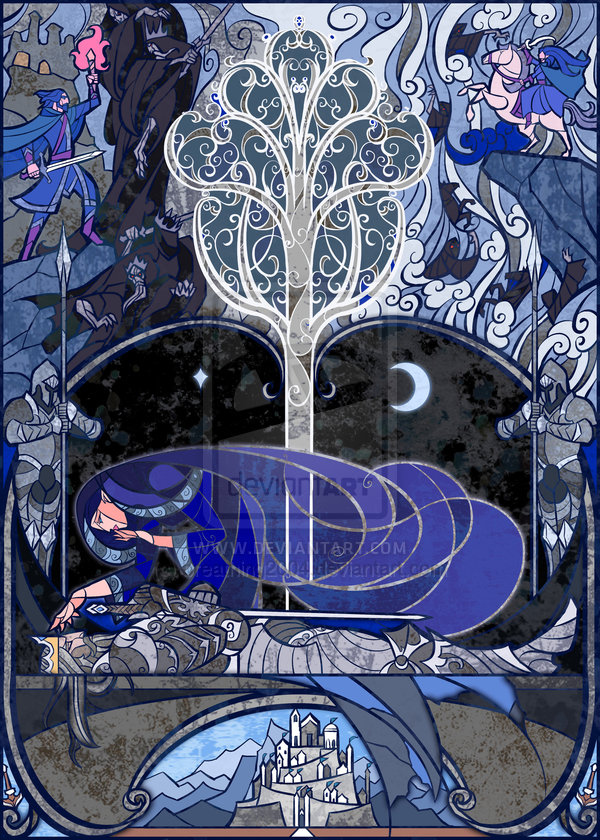
But Arwen went forth from the House, and the light of her eyes was quenched, and it seemed to her people that she had become cold and grey as nightfall in winter that comes without a star. Then she said farewell to Eldarion, and to her daughters, and to all whom she had loved; and she went out from the city of Minas Tirith and passed away to the land of Lórien, and dwelt there alone under the fading trees until winter came. Galadriel had passed away and Celeborn also was gone, and the land was silent.There at last when the mallorn-leaves were falling, but spring had not yet come, she laid herself to rest upon Cerin Amroth; and there is her green grave, until the world is changed, and all the days of her life are utterly forgotten by men that come after, and elanor and niphredil bloom no more east of the Sea.
Via Appendices to “The Lord Of The Rings” by http://J.R.R. Tolkien
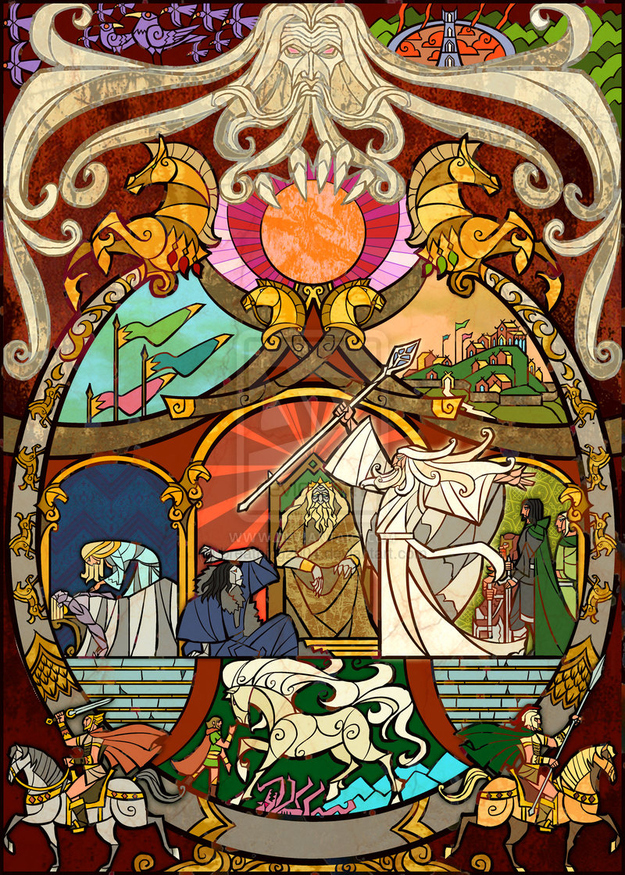
“The wise speak only of what they know, Gríma son of Gálmód. A witless worm have you become. Therefore be silent, and keep your forked tongue behind your teeth. I have not passed through fire and death to bandy words with a serving-man till the lightning falls.” There was a roll of thunder. The sunlight became blotted out from the eastern windows; the whole hall became suddenly dark as night. The fire faded to sullen embers. Only Gandalf could be seen, standing white and tall before the blackened hearth.
Via “The Two Towers” by http://J.R.R. Tolkien
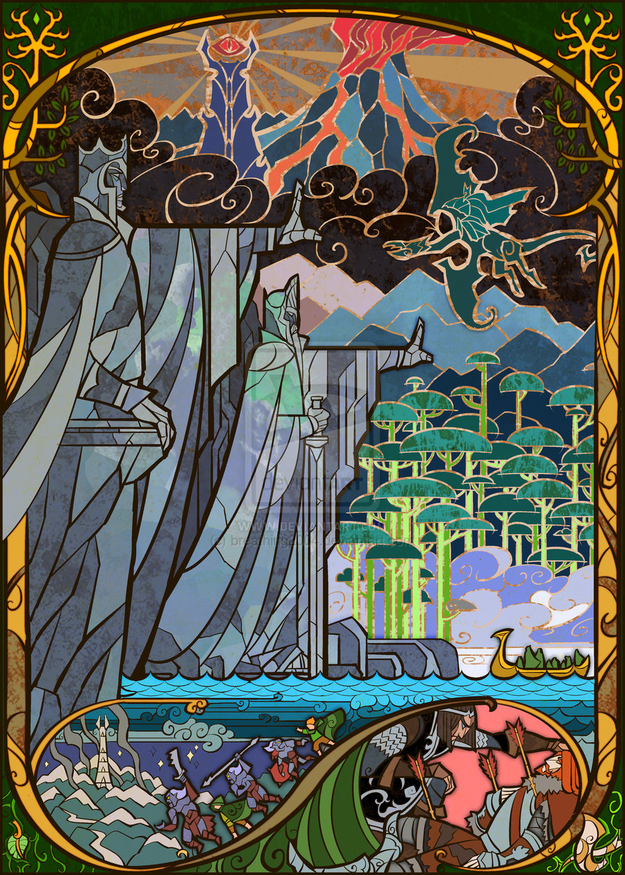
Upon great pedestals founded in the deep waters stood two great kings of stone: still with blurred eyes and crannied brows they frowned upon the North. The left hand of each was raised palm outwards in gesture of warning; in each right hand there was an axe; upon each head there was a crumbling helm and crown. Great power and majesty they still wore, the silent wardens of a long-vanished kingdom.
Via “The Fellowship Of The Ring” by http://J.R.R. Tolkien
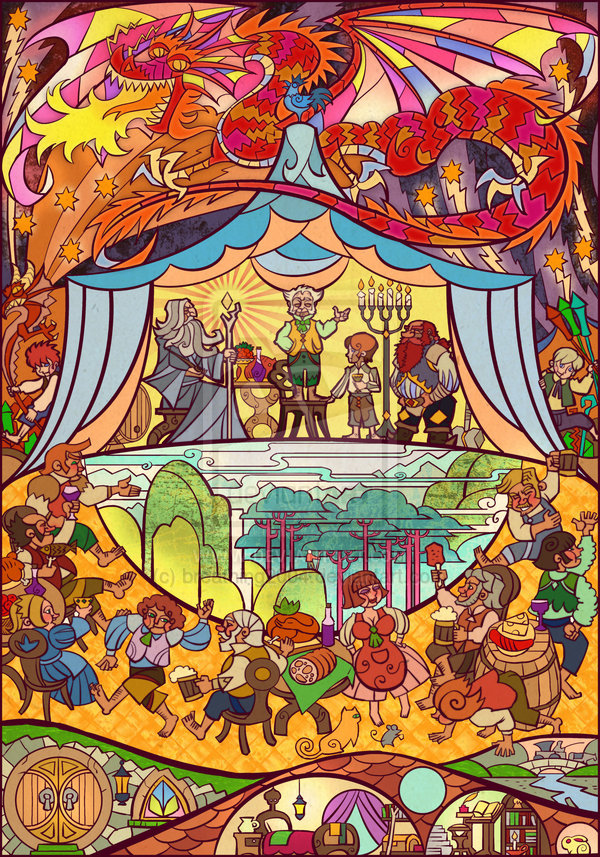
“I wish to make an ANNOUNCEMENT.” He spoke this last word so loudly and suddenly that everyone sat up who still could. “I regret to announce that –
though, as I said, eleventy-one years is far too short a time to spend among you – this is the END. I am going. I am leaving NOW. GOOD-BYE!”He stepped down and vanished. There was a blinding flash of light, and the guests all blinked. When they opened their eyes Bilbo was nowhere to be seen. One hundred and forty-four flabbergasted hobbits sat back speechless.
Via “The Fellowship Of The Ring” by http://J.R.R. Tolkien


Subscribe to:
Comments (Atom)